The old man next door stopped me at my mailbox and asked a question that made my blood run cold.
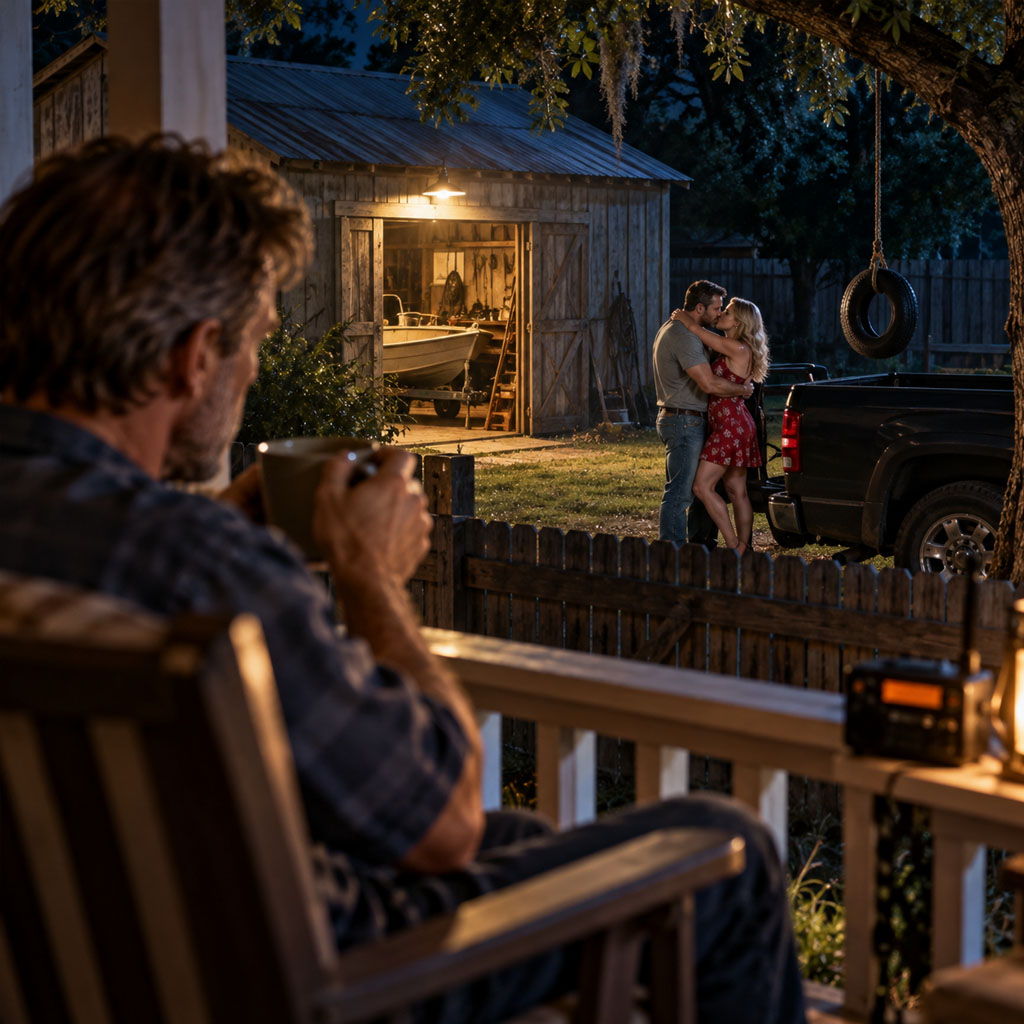
Chapter 2
The following morning, Rebecca acted as though nothing unusual had happened. She walked into the kitchen wearing her hospital scrubs and complained about an exhausting night treating patients. Patricia served scrambled eggs, and Emily sat at the table looking so tired that she could barely keep her eyes open.
“Did you sleep well, sweetheart?” I asked.
Emily glanced toward her grandmother before answering. “Yes, Daddy. I slept fine.”
That tiny frightened glance hurt more than anything else.
Two weeks earlier, Emily’s teacher had sent a note saying she’d been falling asleep during afternoon lessons. I’d assumed she was secretly reading after bedtime. Now I understood someone had been dragging my little girl out of bed night after night.
Before leaving for work, I searched Patricia’s kitchen cabinet.
Behind the containers of herbal tea, I found a small mortar and pestle with white powder clinging to the inside. I also found leftover tea in the pot. I carefully poured some into a clean jar and took it with me.
I didn’t know what I was holding.
But I knew I couldn’t ignore it.
Later that morning, while I was taking a break at the terminal, my phone rang.
The caller identified herself as the physician overseeing the company’s workplace drug-testing program.
“Mr. Carter, your recent screening detected zolpidem,” she explained. “That’s a prescription sleeping medication. Fortunately, we’ve verified an active prescription in your name.”
I stared across the shipping containers.
“I don’t take sleeping pills.”
There was a pause.
“According to our records, a telehealth provider issued your prescription in June. It was filled at a pharmacy in Mobile.”
My hands went numb.
I’d never spoken with that provider. I’d never requested that medication. Yet someone had been obtaining sleeping pills using my name for months.
Suddenly, my deep sleep and morning headaches made terrible sense.
I asked the physician for the pharmacy information and immediately contacted my supervisor. I explained that I might have been exposed to medication without my knowledge and needed to stop operating equipment until the situation was investigated.
Then I made another call.
I contacted Rebecca’s hospital and asked to speak with someone in her department.
A receptionist checked the schedule.
“Mrs. Carter? She’s working days now. She hasn’t been assigned to nights since March.”
I thanked her and hung up.
For several minutes, I sat inside my parked truck, watching men unload equipment across the terminal.
My wife had been lying about her shifts.
My mother-in-law appeared to be secretly medicating me.
And someone was creating videos that made it look as though my daughter wandered alone near dangerous water every night.
The pieces began fitting together in a way I desperately wanted to be wrong.
That evening, I pretended to drink Patricia’s tea again. After Rebecca drove away, I called Walter.
“Would you watch my house tonight?” I asked. “Especially the backyard.”
“Been watching it for weeks, son,” he answered. “You go do what you need to do.”
I followed the road Rebecca usually took toward the hospital. But instead of heading downtown, I turned toward a quiet lakeside neighborhood where wealthy families owned vacation homes.
I found her car outside a waterfront property belonging to Jason Whitmore.
Jason was forty-four, charming, recently divorced, and the wealthy son of a family that owned several marine dealerships along the Gulf Coast. I’d met him through business acquaintances and knew he was preparing to expand into Texas.
His black pickup sat beside Rebecca’s sedan.
I parked down the road and approached the property through the shadows near the lakeshore. The house stood on wooden pilings, with a screened porch overlooking the water.
Through the open windows, I heard Jason laughing.
“Your mother’s getting pretty good at filming,” he said. “That little yellow raincoat makes the girl look completely abandoned.”
Rebecca answered sharply.
“Don’t talk about Emily like that.”
“Relax. I’m saying the evidence looks convincing.”
I stopped beneath the porch.
A video played somewhere above me, and I heard Patricia’s unmistakable voice instructing Emily to walk toward the gate.
“Thirty-nine nights,” Rebecca said. “The attorney says forty will be enough to establish a pattern.”
Jason sounded pleased.
“Then we file the emergency custody petition?”
“As soon as the final incident happens. Mother has the videos. Daniel’s drug test confirms the sleeping pills. And Walter Bennett is practically waiting to call the police.”
My stomach twisted.
Rebecca continued speaking, unaware that I stood only a few feet beneath her.
“The judge will believe Daniel’s been sleeping through Emily wandering outside. Once the emergency order comes through, we can take her to Texas before he gets a hearing.”
Jason asked why they needed such an elaborate plan.
Rebecca’s answer destroyed what remained of my marriage.
“Because Daniel is a good father. That’s the problem. Without evidence against him, he’ll get joint custody, and I’ll be trapped here for years. I want Emily with me, Jason. I’m not sharing her.”
Then they discussed the final incident.
They planned to wait for a storm.
Patricia would give me a stronger dose of sleeping medication, place the prescription bottle beside my recliner, and leave an untouched glass of whiskey nearby.
Around midnight, she would take Emily to the creek and put her inside the wooden canoe stored in our shed.
The boat had belonged to my father.
He’d built it himself before dying in a boating accident when I was twelve. I’d preserved it for more than twenty-five years, polishing the wooden hull every spring but never bringing myself to launch it.
Now they intended to use it against me.
Patricia would leave Emily sitting inside the boat near the flooded creek, then retreat into the house.
Walter would see what appeared to be an unattended child in immediate danger and call 911.
When deputies arrived, they would find me unconscious inside, supposedly intoxicated and taking prescription sedatives while my daughter faced drowning.
Rebecca would arrive from her alleged hospital shift, devastated and innocent.
Jason laughed softly.
“By the time Daniel figures out what’s happened, we’ll be living in Texas.”
Rebecca said nothing.
Then I heard her begin discussing the new house Jason had promised her, complete with a swimming pool and a bedroom overlooking the bay for Emily.
I backed away before I did something reckless.
On the drive home, I could barely breathe.
At Walter’s house, the old man was waiting on his porch.
“Your little girl went outside again,” he said. “Same routine. She’s back in bed now.”
I sat beside him and told him everything.
He listened without interrupting.
When I finished, he looked toward the creek.
“Daniel, that water gets ugly during a storm. There’s a drainage culvert downstream. Anything that gets caught in that current can be dragged straight toward it.”
“I know.”
He studied me for a long moment.
“Then whatever you decide, don’t let them put that child in the water.”
I looked at our darkened house.
For the first time in ten years, the place I’d worked so hard to provide no longer felt like home.
It felt like a trap.
And the people setting it were sleeping under my roof.
Chapter 3
The next morning, I called in sick and visited an attorney named Margaret Hayes.
Margaret was nearly sixty, with silver-streaked hair, sharp eyes, and thirty years of family-law experience. She listened as I explained the secret videos, the sleeping pills, the false work schedule, and the conversation I’d overheard at Jason’s lake house.
When I finished, she remained silent for a long time.
“Daniel,” she finally said, “they’ve constructed an extremely convincing false narrative. If they present those videos without context, they could cause serious damage before you get a chance to defend yourself.”
“Then we stop them.”
“Yes,” she answered. “But we do it without risking your daughter.”
She immediately helped me contact the appropriate authorities and arrange a professional examination of the suspicious tea. She also advised me to seek medical care and document my concerns about the medication.
A physician examined me, and proper samples were collected for testing.
Margaret contacted investigators regarding the apparent prescription fraud and the plans involving Emily. Because we feared Patricia might act quickly, we discussed protective measures and arranged for Walter to provide his observations directly.
I wanted to confront Rebecca that afternoon.
Margaret stopped me.
“Your daughter needs protection more than she needs a confrontation,” she said. “We need to move carefully, but we are not going to leave that child alone with this danger.”
I returned home and found the amber prescription bottle hidden inside Patricia’s closet. The label carried my full name. I photographed its location and left it untouched for investigators.
In the storage shed, I found fresh scrape marks beneath my father’s canoe.
Someone had been moving it.
A cheap yellow rope lay inside the hull, tied loosely to the front.
I stood there looking at the boat my father had built and remembered him teaching me to make knots when I was little.
“Never trust a rope because it looks strong,” he’d told me. “Know what’s holding the other end.”
I covered the canoe and walked back inside.
That afternoon, I made arrangements for Emily to spend the following days with my sister, Linda, who lived twenty minutes away. I told Patricia that Linda wanted some time with her niece while school was out for a teacher workday.
Patricia objected immediately.
“Rebecca won’t like you making arrangements without asking her.”
“Rebecca can call me,” I said.
For a moment, her expression changed.
It was the first time I’d seen genuine alarm in her eyes.
But when I picked Emily up from school, Patricia was waiting by the kitchen door with an oddly cheerful smile.
“Your aunt Linda called,” she told Emily. “She has something unexpected to take care of. You’ll be staying home tonight.”
I knew immediately that something was wrong.
Linda hadn’t called me.
I stepped outside and phoned my sister. She answered, confused, and assured me she’d made no such call.
Before I could return inside, my phone rang again.
It was Walter.
“Daniel, I don’t like what I’m seeing. Your mother-in-law’s been going in and out of that shed. And the weather service says the storm’s coming tonight, not Saturday.”
I looked toward the western sky.
Heavy gray clouds were rolling toward Mobile Bay.
That evening, Rebecca came home unexpectedly and prepared my favorite dinner. She talked about ordinary things, asked about work, and smiled at Emily as though nothing had changed.
After our daughter went upstairs, Rebecca sat beside me.
“You seem unhappy lately,” she said.
I studied her face.
This was the woman who’d held my hand at my father’s funeral anniversary services. The woman who’d cried when Emily was born. The woman who’d promised we’d grow old together on this very porch.
“Is there something you want to tell me?” I asked.
Her smile disappeared.
For a moment, I thought she might confess.
Instead, she brushed a hand across my shoulder.
“You’re just tired, Daniel. Get some sleep.”
Patricia appeared carrying the familiar mug of tea.
Rebecca looked at it and hesitated.
“Mom, maybe he doesn’t need that tonight.”
Patricia’s expression hardened.
“He needs his rest.”
Something passed between them.
Rebecca stood, kissed my cheek, and went upstairs.
I left the mug untouched.
At ten-fifteen, the rain began pounding against the windows.
My phone vibrated with a message from Walter.
“She’s getting ready.”
I stepped into the hallway and called the investigator Margaret had helped me contact. I explained that Patricia appeared to be preparing the incident we’d reported. I also told him Emily was still inside the house.
He instructed me to keep my daughter away from the creek and informed me that officers were being dispatched.
I went straight to Emily’s room.
Her bed was empty.
The curtains moved gently beside the open window, and her yellow raincoat was missing from its hook.
I heard the back door close.
I ran into the kitchen and saw Patricia crossing the yard with Emily’s hand gripped tightly in hers.
She had moved sooner than expected.
The storm was raging, and the floodlight beside the shed cast enormous shadows across the flooded grass.
I shouted Emily’s name.
Patricia turned.
For one second, we stared at each other.
Then she hurried toward the creek.
“Stop!” I shouted.
Emily looked over her shoulder.
“Daddy?”
Patricia pulled her forward.
“Come on, sweetheart. We have to finish.”
I was halfway across the yard when Walter’s porch light snapped on.
“Daniel!” he shouted. “The officers are coming!”
Patricia reached the creek gate.
The old canoe was already resting at the muddy bank.
She tried to lift Emily into it.
I charged through the gate and grabbed my daughter’s arm.
“No,” I said. “You’re coming with me.”
Emily began crying.
Patricia stumbled backward, her phone falling into the mud.
“Daniel, you’re confused!” she screamed. “You’ve been taking sleeping pills! You don’t know what you’re doing!”
I lifted Emily into my arms and carried her away from the water.
Behind me, Patricia continued shouting.
“Help! Somebody help! He’s completely out of control!”
Walter hurried down his porch steps with a powerful flashlight.
“I’m right here, Daniel,” he called. “I’ve got eyes on everything.”
Patricia suddenly ran toward the house.
At the back steps, she stopped and turned to face us.
Then she began screaming into the darkness.
“Wake up, Daniel! Please wake up! Emily’s outside!”
It took me a moment to understand.
She was performing the scene they’d rehearsed.
Even with me standing in the yard holding Emily, Patricia was shouting her prepared lines for whoever might hear.
A patrol car turned into the driveway.
Then another.
The moment the deputies entered the backyard, Patricia ran toward them.
“Thank God you’re here!” she cried. “My son-in-law has been taking pills. I couldn’t wake him. His little girl wandered outside, and I was trying to save her!”
The older deputy looked past her.
I stood beneath the floodlight, holding my trembling daughter.
“Ma’am,” he said slowly, “who exactly couldn’t you wake?”
Patricia stopped talking.
Walter stepped forward.
“Officer, I’ve been watching that woman take this child outside at midnight for weeks. She’s been filming it. Tonight she tried putting the little girl in that canoe.”
I spoke as calmly as I could.
“My attorney has already contacted investigators. There’s a report about possible drugging, prescription fraud, and a planned attempt to manufacture evidence against me.”
The deputy looked at Patricia.
She tried to speak.
No words came.
Emily buried her face against my neck.
“Daddy,” she whispered, “I don’t want to play the moonflower game anymore.”
I held her tighter.
“You never have to play it again, sweetheart.”
Chapter 4
Rebecca arrived forty minutes later in Jason Whitmore’s black pickup truck.
She stepped out wearing her hospital scrubs and rushed toward the house with tears already streaming down her face.
“Oh, my God! Where’s Emily? I came straight from work!”
One deputy exchanged a glance with another.
They had already confirmed Rebecca wasn’t scheduled to work that night.
They had also spoken to Walter, inspected the boat near the creek, and learned that Patricia’s phone contained dozens of recordings.
Rebecca stopped when she saw me standing beside the ambulance.
Emily sat inside, wrapped in a blanket, while paramedics checked her for signs of exposure to the cold rain. She was frightened but physically unharmed.
“Daniel,” Rebecca whispered.
I looked at the woman I’d loved for a decade.
“Why?”
She began crying harder.
“Please, not here.”
“You were willing to let people believe I abandoned our daughter beside a flooded creek,” I said. “You were willing to destroy my life just so you wouldn’t have to share custody.”
Rebecca shook her head.
“Nobody was supposed to get hurt.”
I thought about Emily’s small hand resting against that gate every night. I thought about the pills I’d unknowingly consumed and the hours I’d lost while my daughter was being frightened into keeping secrets.
“She was already getting hurt,” I answered.
The investigation that followed revealed more than I could have imagined.
The laboratory examination confirmed sleeping medication in the tea. Additional medical evidence supported a history of exposure, while investigators traced the prescription account to information connected with Rebecca.
The pharmacy had records showing she had collected the medication.
Patricia’s phone contained weeks of staged recordings, along with messages discussing how to make Emily appear unattended. Investigators also uncovered documents connected to the planned emergency custody filing.
One document was especially disturbing.
It contained a proposed statement supposedly written by Walter, describing the storm-night incident before it had even happened.
Walter stared at it in disbelief.
“That’s supposed to be my signature?” he asked. “I haven’t written my name that neatly in fifteen years.”
The forged statement helped expose the conspiracy.
Patricia eventually cooperated with prosecutors. She admitted that Rebecca wanted to relocate to Texas with Jason and feared that an ordinary custody proceeding would prevent her from taking Emily away.
Patricia claimed she had only wanted to help her daughter find happiness.
That explanation did nothing to excuse what she’d done.
She had repeatedly frightened an innocent child, secretly administered medication, and nearly placed Emily inside a small boat beside floodwater.
Criminal charges followed for those involved, and the evidence became central to the family court proceedings.
I was awarded sole custody of Emily. Any future contact with Rebecca required supervision and compliance with the court’s protective conditions.
The outcome didn’t make me feel victorious.
I had lost my marriage, my trust in someone I loved, and the comfortable belief that the people inside a house always had one another’s best interests at heart.
But I still had my daughter.
And that was enough to begin again.
For several months, Emily struggled to sleep.
She woke from nightmares asking whether Grandma was coming to take her outside. Sometimes she wanted every light in the hallway turned on. Other nights she climbed into my bed and held my hand until morning.
A counselor helped her work through what had happened.
I learned that healing couldn’t be rushed.
One afternoon, we were sitting beneath the oak tree when Emily pointed toward the shed.
“Daddy, did Grandma really plant moonflowers?”
I looked at the narrow flower bed beside the fence.
“She did, sweetheart.”
“Do they really open at night?”
“Sometimes they open in the evening, when the sun starts going down.”
Emily was quiet for a moment.
“Could we watch them together?”
I smiled.
“I’d like that.”
We began watering the neglected plants. Every afternoon, Emily carried a little green watering can across the yard and checked the vines for buds.
At first, she refused to walk anywhere near the creek gate. I never pushed her.
Then, one evening in early summer, she spotted a large white flower beginning to unfold.
“Daddy! Come see!”
I joined her by the fence.
We watched the petals slowly open in the fading sunlight.
Emily reached for my hand.
“Grandma said the flowers wouldn’t open if I told you about our game.”
I knelt beside her.
“Emily, grown-ups should never ask children to keep secrets that make them frightened or unsafe. You can always tell me when something doesn’t feel right.”
She considered that seriously.
“Even if somebody says you’ll be mad?”
“Especially then.”
She wrapped her arms around my neck.
“I was scared, Daddy. But Grandma said you needed your sleep.”
I held her for a long time.
“I’m sorry I didn’t know sooner,” I whispered.
She pulled back and looked into my eyes.
“But you came outside when I called.”
I nodded.
“Yes, baby. I did.”
She smiled.
“Then that’s what I’ll remember.”
By the following spring, Emily was sleeping peacefully again. Her grades improved, she started taking piano lessons, and she gradually returned to playing beneath the oak tree.
I eventually went back to operating cranes after completing the necessary medical and workplace reviews.
Some things about me had changed.
I still valued patience and careful judgment, but I no longer confused silence with peace.
I also understood that paying bills, keeping food on the table, and working hard weren’t the only responsibilities of being a father.
I had to notice.
I had to listen.
And when something felt wrong, I had to ask questions, even when I was frightened of the answers.
Walter became more than a neighbor.
He became family.
On Sundays, Emily sometimes brought him homemade cookies, and he told her stories about shrimp boats, dolphins, and the thunderstorms he’d survived during fifty years on the Gulf.
He never treated her as a frightened little girl who neeed pity.
He treated her as someone brave enough to keep growing.
One sunny afternoon, Walter helped me carry my father’s wooden canoe out of the shed.
For the first time in twenty-six years, I took it to a calm lake and eased it into the water.
Walter stood onshore, watching as I paddled a short distance away.
“Your daddy knew how to build a good boat,” he called.
I looked down at the smooth wooden hull.
“Yes,” I answered. “He did.”
The canoe glided quietly across the lake. For a moment, I could almost picture my father sitting in the stern, his strong hands guiding the paddle.
I’d spent so many years keeping that boat safe inside a shed that I’d forgotten why he’d built it.
Some things are meant to carry us forward.
That evening, Emily and I brought Walter a slice of peach pie.
He sat on his porch in his usual chair, with the marine radio murmuring beside him. The sky over the neighborhood was turning pink, and the air smelled of freshly cut grass.
Emily climbed onto his porch swing.
“Mr. Walter, are you still awake at midnight?”
“Most nights, sweetheart.”
“Don’t you get lonely?”
The old man’s eyes softened.
“Sometimes. But not quite so much anymore.”
Later, after Emily went home to brush her teeth, I sat beside him.
For a long time, neither of us spoke.
Then I looked toward the backyard where my daughter had once stood trembling beneath a floodlight.
“Walter, I’ve been meaning to ask you something.”
He turned toward me.
“What’s that, son?”
“Why didn’t you just call the police when you first saw Emily outside?”
He thought for a while.
“Because something didn’t fit,” he said. “Your girl looked half asleep. Your mother-in-law looked wide awake. And every morning, you headed off to work without any idea what was happening.”
He adjusted the radio.
“I figured the one person who ought to know was the one person nobody had bothered telling.”
I swallowed the lump in my throat.
“You saved my family.”
Walter shook his head.
“No, Daniel. I asked you a question. You listened, and then you protected your little girl.”
Across the fence, a bedroom light went out.
Emily was safely asleep.
The shed floodlight remained dark, and the creek flowed quietly beyond the trees.
I thought about how easily I’d dismissed Walter’s question that afternoon at the mailbox. How close I’d come to smiling politely and walking away.
A different man might have done exactly that.
A different neighbor might have decided it wasn’t his business.
But Walter had cared enough to speak, even though he risked being told he was mistaken.
And I had listened.
As the stars appeared above our houses, I realized that kindness doesn’t always arrive as comfort. Sometimes it arrives as an uncomfortable question from someone who notices what everyone else has missed.
I looked over at Walter, sitting quietly beside his radio.
“Thank you,” I said.
He nodded without looking up.
“That’s what neighbors are for.”
And for the first time in a very long while, the silence between our houses felt like peace.