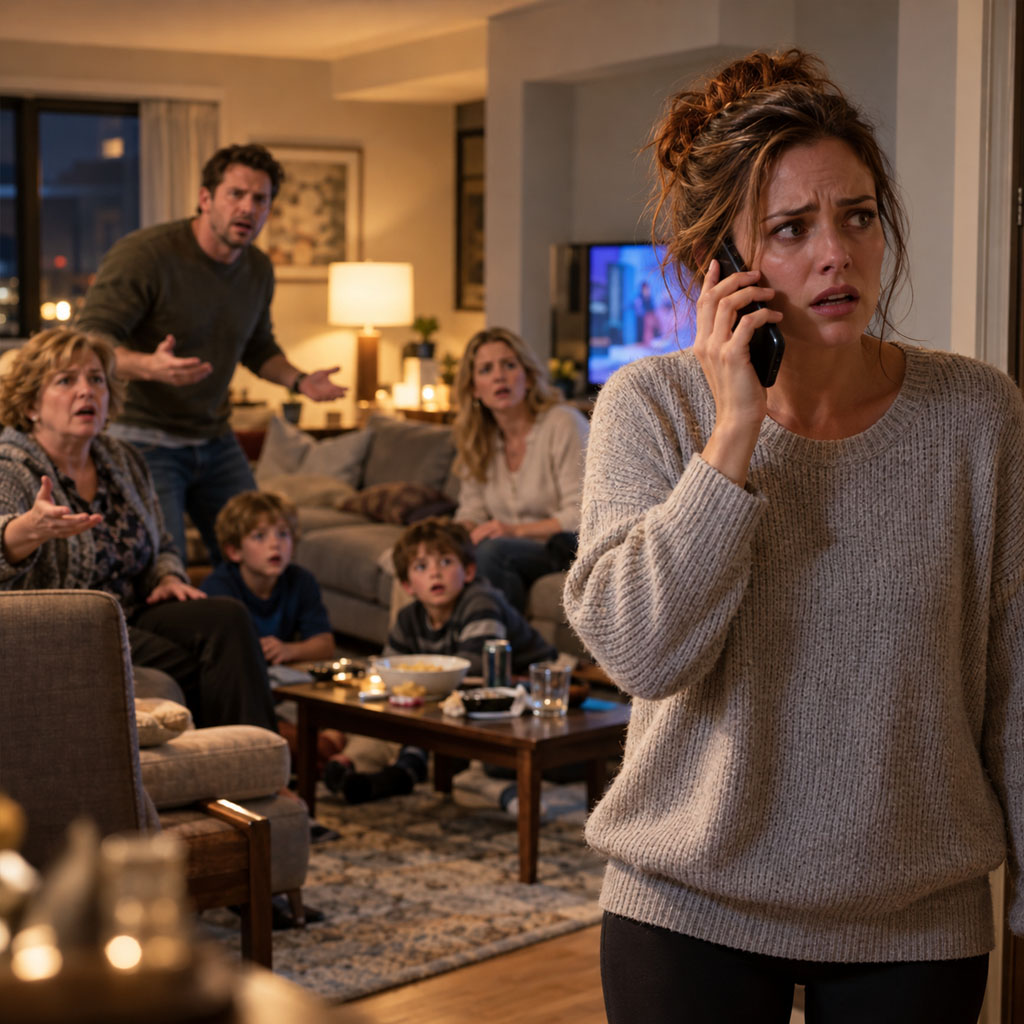
Six people were sitting in my living room when I came home from work, and not one of them had been invited by me. My husband looked up from the couch, smiled nervously, and said, “Honey, you’re home! We were just wondering what you were making for dinner.” That was the moment I realized something was terribly wrong with my marriage.
Chapter 2
The following morning, Daniel behaved as though nothing unusual had happened. He kissed my cheek, poured himself coffee, and asked whether we needed groceries. I watched him move comfortably through the kitchen, wondering how two people could live in the same house and experience entirely different marriages.
For him, Tuesday had been an ordinary family visit. For me, it had been another reminder that my time, my comfort, and even my home seemed to belong to everyone except me.
I decided we needed a serious conversation.
That Saturday, I asked Daniel to sit with me at the kitchen table. I explained that I liked his relatives and wasn’t trying to separate him from them, but I needed to know who was coming into our home before they arrived.
“I don’t think that’s unreasonable,” I said. “I wouldn’t invite six coworkers over without talking to you first.”
Daniel nodded slowly.
“Okay. I get it.”
“Do you?”
“Yes, Rachel. I’ll talk to everyone. From now on, we’ll discuss visits beforehand.”
He reached across the table and squeezed my hand. For the first time in weeks, I felt hopeful.
When his parents asked to visit the following weekend, he told me several days ahead. We agreed they’d stay Saturday night, and I cooked a nice dinner for everyone. His mother complimented the roast chicken, and his father helped Daniel wash the dishes.
I went to bed thinking perhaps we had finally found our balance.
At seven the next morning, an unfamiliar laugh woke me.
I walked into the hallway and heard Daniel talking with his cousin Kevin in the kitchen. Kevin lived forty minutes away and had apparently decided to stop by for breakfast.
Daniel had welcomed him without mentioning a word to me.
I stood motionless outside the kitchen.
It wasn’t Kevin’s presence that hurt. He was a pleasant man, and under different circumstances, I would have happily made another pot of coffee.
What hurt was the ease with which Daniel had broken his promise.
“Morning, sweetheart,” he said when he noticed me. “Kevin was passing through.”
“So I see.”
I poured myself coffee, exchanged a few pleasantries, and announced that I was going for a walk.
The November air was cold enough to sting my cheeks. I walked through the park near our building, past bare trees and empty benches, trying to understand why such a seemingly small incident had left me close to tears.
By the time I returned, Kevin was gone.
Daniel stood at the sink rinsing plates.
“Sorry I forgot to mention him,” he said.
I leaned against the counter.
“Daniel, we need to talk again.”
He sighed. “Rachel, it was just breakfast.”
“That’s what you keep saying. Just breakfast. Just dinner. Just one weekend. Every time, the individual visit seems small enough that you think I shouldn’t complain.”
“Because it is small.”
“But all of them together aren’t small.”
He set down the plate.
“What do you want me to do? Tell my family they can’t come over?”
“I want you to ask me before inviting them.”
“They’re not strangers.”
“And I’m not a hotel manager.”
His face tightened.
“Why are you making this so difficult?”
That question hurt more than I expected.
“I’m not trying to make anything difficult,” I answered. “I’m trying to make our marriage work for both of us.”
Daniel stared at the floor.
“My family has always been close. You knew that when you married me.”
“I knew you loved your family. I didn’t know that meant I wouldn’t have a say in my own house.”
For several seconds, neither of us spoke.
Then he said quietly, “I don’t think you’re being reasonable.”
I had spent months wondering whether I was explaining myself badly. Hearing those words finally made something clear.
Daniel understood what I wanted.
He simply didn’t believe I should want it.
That afternoon, I called my closest friend, Susan, who had known me since college. She listened while I described the visits, the arguments, and the promises that disappeared the moment someone knocked on our door.
“Rachel,” she said, “when was the last time you felt peaceful at home?”
I opened my mouth, but no answer came.
Susan continued gently. “You worked your whole life for that condo. You used to love having people over. Now you sound nervous about opening your own front door.”
I looked around the living room. Aunt Linda had moved my floor lamp during her last visit, and someone had left a stain on the armchair.
“I keep thinking that if I explain it better, he’ll finally understand.”
“Maybe understanding isn’t the problem,” Susan said.
That evening, I called my father.
Dad had retired from accounting two years earlier and lived outside Cincinnati. He was a practical man who never rushed to offer an opinion.
After hearing everything, he asked one question.
“The condo is still in your name, isn’t it?”
“Yes. I bought it before Daniel and I married.”
“And you’ve kept the paperwork?”
“Of course.”
“Good,” he said. “Whatever you decide, make sure you understand your options. And remember, sweetheart, getting married didn’t mean you stopped mattering.”
I cried after hanging up.
Not because Dad had said anything extraordinary, but because someone had finally reminded me of a truth I’d almost forgotten.
I mattered.
The following Thursday, Aunt Linda called while I was leaving work.
“Rachel, honey, I’m worried about you and Daniel,” she began. “He says you’ve been unhappy lately.”
I stopped beside my car.
“What exactly did he tell you?”
“Well, that you’re uncomfortable with the family visiting.”
“Did he tell you I’ve repeatedly asked him to discuss visits with me beforehand?”
There was a pause.
“Sweetheart, when you marry into a close family, you have to make adjustments.”
“I have made adjustments, Linda.”
“Marriage isn’t always about getting your own way.”
I closed my eyes.
“You’re right. It isn’t. That’s why Daniel needs to compromise too.”
Her tone changed.
“We all love you, Rachel. But you can’t expect Daniel to turn his back on his family.”
“I’m not asking him to.”
“Then perhaps you should come to dinner Saturday. Everyone will be there, and we can put this unpleasantness behind us.”
I almost laughed.
They wanted another family dinner to resolve my complaint about too many family gatherings.
“I’ll think about it,” I replied.
When I got home, Daniel had cooked pasta and set two candles on the table. He smiled as though we were celebrating something.
“Linda said she talked to you,” he announced.
I slowly removed my coat.
“Daniel, why did you involve your aunt in our disagreement?”
He frowned.
“She’s family. I needed someone to talk to.”
“You could have talked to me.”
“I did talk to you.”
“No. You listened until I stopped speaking. Then you went to your relatives and told them I didn’t want them around.”
“That’s not what I said.”
“Then why is your aunt calling to explain how marriage works?”
He didn’t answer.
I sat down across from him and stared at the dinner he’d prepared.
For a moment, I remembered the man who had cried during our wedding vows, promising to stand beside me through whatever life brought.
“I don’t know what else you want from me,” he finally whispered.
I looked at him with tears in my eyes.
“I want a husband who thinks my feelings matter even when his family disagrees with them.”
He pushed his plate away.
And in the silence that followed, I realized I was no longer waiting for him to understand.
I was beginning to wonder whether I wanted to stay.
Chapter 3
I didn’t attend the family dinner that Saturday. Daniel went alone, and I spent the evening sitting in my favorite armchair, listening to the unfamiliar sound of complete silence. Nobody was asking for another serving, searching through my cabinets, or expecting me to entertain them.
For the first time in months, I felt comfortable in my own home.
And that comfort made me terribly sad.
I’d married Daniel because I wanted to share my life with him, not because I needed someone to complete it. Before he moved in, I’d had friends, meaningful work, a beautiful home, and evenings I genuinely enjoyed.
Somehow, I’d begun sacrificing those things to prove I was a good wife.
On Monday, I scheduled an appointment with a family-law attorney Dad recommended. Her name was Patricia Morgan, and she welcomed me into a modest downtown office with a calm, professional manner.
I explained that I owned the condo before marriage, that Daniel and I shared household expenses, and that our disagreements had reached a point where I was considering separation.
Patricia reviewed my documents carefully.
“Your ownership records are straightforward,” she said. “But marital property laws can be complicated, particularly when spouses contribute to household expenses. We’ll need to evaluate everything before making decisions.”
I appreciated that she didn’t promise easy answers.
She explained the practical steps involved in separating finances, establishing appropriate living arrangements, and protecting both parties’ legal rights.
Then she set her pen down.
“Rachel, are you certain you want to move forward?”
I looked at the wedding ring on my finger.
“I’ve been trying to save my marriage for months,” I said. “But I can’t save it alone.”
She nodded.
“Then we’ll proceed carefully.”
Three days later, I asked Daniel to sit with me after work.
He noticed the folder on the kitchen table immediately.
“What’s that?” he asked.
“Please sit down.”
His face went pale.
“Rachel?”
I waited until he lowered himself into the chair.
“I spoke with an attorney,” I said. “I think we need to separate.”
For several seconds, he didn’t move.
Then he gave a short, disbelieving laugh.
“You’re joking.”
“No.”
“You’re talking about ending our marriage because my family visits too often?”
I shook my head.
“I’m talking about ending our marriage because you won’t treat me as an equal partner.”
“That’s ridiculous.”
“Daniel, I have begged you to listen. I’ve cried, compromised, explained, and forgiven. You promised things would change, but every time your family wanted something, my feelings stopped mattering.”
He looked away.
“I can’t believe you’re doing this.”
“Neither can I,” I whispered. “I never wanted us to end up here.”
He stood abruptly and began pacing.
“My mother warned me this would happen.”
I stared at him.
“What?”
He stopped walking.
“She said you were becoming controlling. That eventually you’d make me choose between you and the family.”
Something in my chest tightened.
“When did she say that?”
He hesitated.
“A few weeks ago.”
I lowered my eyes to the folder.
So even now, with our marriage falling apart, Daniel was still looking to his family to explain what was happening.
“Did you tell her what I actually asked for?”
“Rachel, please don’t start again.”
I looked up.
“I’m not starting anything. I’m asking whether you ever defended me when they criticized me.”
His silence answered.
That was when the last small piece of hope inside me finally gave way.
“Daniel, I never wanted you to choose between loving your family and loving me. I wanted you to understand that being married means protecting the relationship we’re building together.”
He sat down again, covering his face with his hands.
“I love you,” he said.
“I know.”
“Then why isn’t that enough?”
I waited until he looked at me.
“Because love without respect becomes something a person has to survive instead of enjoy.”
Tears filled his eyes.
He asked whether we could try counseling, whether he’d already ruined everything, whether I would give him one more chance.
Part of me wanted desperately to say yes.
But I remembered the countless times he’d promised to change, and how each promise lasted only until the next phone call from his relatives.
“I needed you to want to change before you were afraid of losing me,” I said quietly.
Daniel cried then, and I cried with him.
There was no shouting, no dramatic accusation, and no satisfaction in seeing him hurt.
I was watching a marriage I’d believed in come to an end.
He eventually agreed to stay with his brother while we worked through the separation. We discussed practical arrangements and agreed to follow legal guidance so neither of us made hasty decisions.
He packed a suitcase that evening.
I stood near the bedroom door while he folded his shirts, remembering the afternoon he’d first brought his belongings into my apartment.
Back then, we’d laughed because his clothes barely fit in the closet. I’d cleared out two drawers for him and told him there would always be room for him in my life.
Now he was closing those drawers for the last time.
At the front door, Daniel turned toward me.
“I’m sorry, Rachel.”
I wiped my cheeks.
“I’m sorry too.”
He stepped closer and kissed my forehead.
“I really thought we were happy.”
I looked at him sadly.
“I was happy when we were together, Daniel. I was unhappy when being together meant I had to disappear.”
He nodded, though I wasn’t certain he understood.
Then he left.
I closed the door, turned the lock, and leaned against it.
The apartment was quiet.
I expected to feel triumphant, or relieved, or perhaps frightened.
Instead, I slid slowly to the floor and cried for the future I had imagined.
I cried for the children we’d discussed having, the vacations we’d planned, and the old age I’d pictured sharing with him.
But underneath the grief was a feeling I couldn’t deny.
I could breathe again.
Chapter 4
The weeks after Daniel moved out were harder than I expected. I missed hearing him make coffee in the morning and seeing his shoes beside the door. Sometimes I caught myself reaching for my phone to tell him something funny that had happened at work.
Then I remembered that telling him would no longer be part of my ordinary day.
Grief came in unexpected moments, but so did relief.
I could come home from work without wondering who might be waiting in the living room. I could leave a book on the coffee table and find it there the next morning. I could spend an entire Saturday doing absolutely nothing without explaining myself to anyone.
The peace felt unfamiliar at first.
Then it began to feel like home.
Aunt Linda called several times. I let the first two calls go unanswered, but eventually decided I wanted to speak with her.
“Rachel,” she began, sounding unusually subdued. “I’ve been thinking about everything that happened.”
I sat beside the living room window.
“I’m listening.”
She hesitated.
“Daniel’s very upset. We all are.”
“I know.”
“I suppose we didn’t realize how much we were asking of you.”
I looked down at my hands.
“No, I don’t think you did.”
Her voice trembled.
“We always thought of you as one of us.”
“I wanted to be part of your family, Linda. But I didn’t want to lose the right to make decisions about my own home.”
For once, she didn’t argue.
After a long silence, she said, “Maybe we should have respected that.”
The words arrived too late to save my marriage, but I was grateful to hear them.
“Thank you,” I answered.
“I hope someday you can forgive us.”
“I don’t want to spend my life angry with anyone,” I said. “But I need some distance now.”
“I understand.”
And surprisingly, I believed she did.
Daniel and I continued communicating about the separation through our attorneys when necessary. He remained cooperative, and we eventually reached an agreement that addressed our finances and property fairly under the applicable rules.
The divorce became final the following spring.
On the day we signed the last documents, Daniel looked older than he had on our wedding day. His hair was slightly longer, and there were dark circles beneath his eyes.
He held the office door open for me as we left.
“Take care of yourself, Rachel,” he said.
“You too.”
For a moment, I thought he might say something else.
Instead, he gave me a sad smile and walked toward his car.
I watched him go, realizing that I could still care about him without wanting our marriage back.
Those two feelings could exist together.
A few weeks later, Dad drove up from Cincinnati for a weekend visit. He had called several days ahead, asking whether Saturday would be convenient.
When I opened the door, he studied my face carefully.
“You look better, sweetheart,” he said.
“I feel better.”
He stepped inside and looked around.
The living room had changed. I’d moved the armchair back beside the window, restored the painting Daniel’s aunt had insisted belonged on another wall, and bought fresh flowers for the dining table.
Dad smiled.
“Looks like you again.”
I laughed softly.
“That’s what I’ve been trying to do.”
We spent the afternoon cooking together. Dad fixed a loose cabinet hinge, and I made the pot roast he used to prepare on Sundays when I was little.
Over dinner, he asked about work.
I told him that my young patient, the boy whose setback had made that difficult Tuesday so exhausting, had finally mastered a movement we’d practiced for months.
“He picked up his spoon by himself,” I said, smiling. “His mother started crying right there in the therapy room.”
Dad’s face softened.
“Those are the things worth celebrating.”
I nodded.
Helping that child had reminded me of something important. Progress wasn’t always dramatic, and sometimes the smallest changes required the greatest courage.
The same was true of rebuilding my own life.
In the months that followed, I began inviting people over again. Susan came for dinner on Fridays, and a few coworkers joined me for brunch on occasional Sundays.
The difference was simple but profound.
They came because I’d invited them.
They asked whether the time was convenient. They helped clear the table, thanked me for dinner, and went home with hugs instead of expectations.
I remembered how much I’d once loved opening my home to people.
I’d never disliked having company.
I’d disliked having no choice.
One Saturday morning, I went for a walk through the park three blocks from my building. The trees were beginning to bloom, and sunlight filtered through the branches. Somewhere nearby, a dog barked while two children raced each other toward the playground.
I bought a cinnamon roll from the corner bakery and sat on a bench with my coffee.
For the first time in a long while, I wasn’t thinking about Daniel, his relatives, or everything that had gone wrong.
I was simply enjoying the morning.
An older woman sat down on the opposite end of the bench. She smiled politely, opened a newspaper, and settled into the sunshine.
I thought about all the years I’d spent believing that love meant constantly making room for everyone else.
Love did require compromise. It required patience, kindness, sacrifice, and a willingness to consider another person’s needs.
But it shouldn’t require someone to surrender the very things that made their life their own.
When I finished my coffee, I walked back toward the apartment.
The familiar brick building came into view, its windows reflecting the spring sunshine. I climbed the stairs, reached my door, and took out my key.
For a moment, I stood in the hallway remembering that terrible Tuesday when I’d come home exhausted and found six unexpected visitors waiting for dinner.
I’d thought the worst part was that nobody had bothered to ask whether I wanted company.
Now I understood that the deeper wound had been realizing my husband didn’t think my answer mattered.
I slipped the key into the lock and opened the door.
Inside, sunlight stretched across the hardwood floors. My favorite armchair stood beside the window, my book waited on the coffee table, and fresh flowers filled the room with the scent of spring.
Nobody had moved my belongings.
Nobody was waiting for me to cook.
Nobody had made decisions about my evening without me.
I put down my keys and smiled.
I still hoped Daniel would find happiness. I hoped he would someday understand that loving his family didn’t mean allowing them to make every decision for him. And I hoped that if he ever married again, he’d remember the painful lessons our marriage had taught us both.
As for me, I wasn’t certain whether I’d ever remarry.
But I knew that if love entered my life again, it would have to arrive with respect.
I would gladly make room for someone who treasured my peace as much as his own. I would share my kitchen, my evenings, and perhaps even the other half of my closet.
What I would never share again was the right to have a voice in my own life.
I walked into the kitchen, made myself a cup of tea, and carried it to the window.
Outside, the world continued just as it always had. Cars passed, neighbors talked, and a family walked down the sidewalk holding hands.
I watched them with a peaceful heart.
Once, I’d believed a house full of people automatically meant a house full of love.
Now I understood that a loving home wasn’t measured by how many people felt entitled to enter it, but by how safe and respected the people living there felt.
My apartment was quiet that afternoon.
And after everything I’d been through, that quiet was one of the most beautiful sounds I’d ever heard.