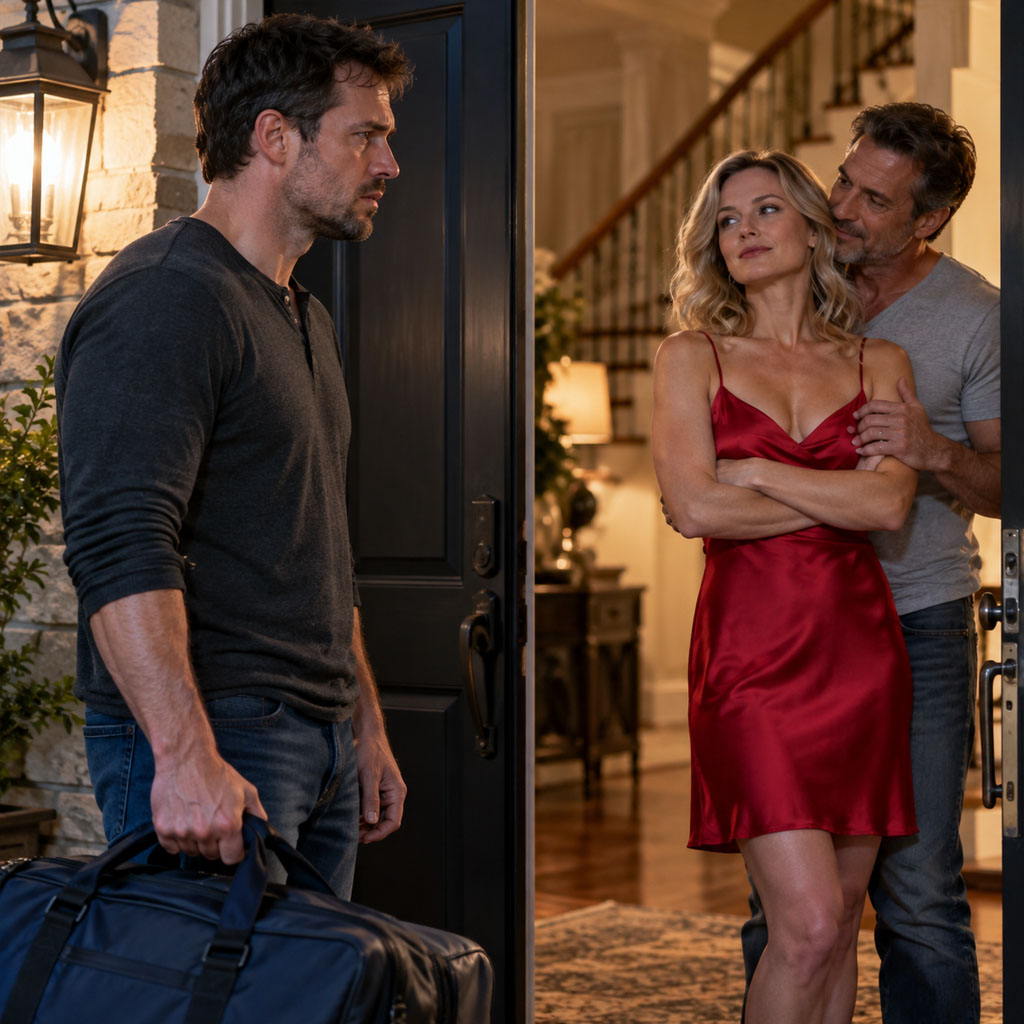
The day my youngest son screamed when I picked him up, I discovered that the man my wife had chosen over me had been hurting our children. But what nearly destroyed me was realizing that my kids had been too frightened to tell me, because their mother had spent months convincing them I was the dangerous one.
Chapter 2
I moved into a small apartment two weeks later. Leaving the family home was one of the hardest decisions I’d ever made, but the tension had become unbearable. Every conversation with Lauren turned into an argument, and every argument seemed to make my children more frightened of me.
Margaret warned me not to make decisions based on anger. She reminded me that custody would depend on the children’s welfare, not which parent had been unfaithful. I understood that, but I couldn’t accept letting my children grow up believing something untrue about their father.
The worst nights were the quiet ones.
I’d sit at my little kitchen table with dinner growing cold, staring at photographs of three smiling children who no longer wanted to speak to me. Sometimes I’d pick up the phone to call Ethan, then put it down because I was afraid he’d reject me again.
Finally, I wrote him a letter.
I told him that I loved him, that he had every right to feel confused, and that I wanted an opportunity to explain what had happened. I also acknowledged that my angry behavior during the confrontation had frightened him and his sister. Whatever Lauren had done, I was responsible for how I handled my own feelings.
Three days later, Ethan called.
“Dad, can we talk somewhere besides the house?”
We met at a diner where our family used to eat breakfast after church. Sophie and Caleb came with him, sitting close together on one side of the booth. I ordered their usual pancakes, but nobody seemed hungry.
I told them their mother and I were divorcing because she’d been involved with another man.
Ethan looked stunned.
“Mom said she wanted to leave because you were hurting her.”
“I know what she told you,” I answered. “But I’ve never hit your mother. I did yell at her that night, and I’m sorry you saw that. Being angry doesn’t give me permission to frighten anybody.”
Sophie studied my face.
“Then why did Mom say those things?”
“I can’t answer that for her, sweetheart.”
I explained that I had discovered the affair and that I could establish what I’d learned. I didn’t show them anything intimate or ask them to take sides. Instead, I told them they were entitled to love both their parents, regardless of what had happened between us.
Ethan sat quietly for a long time.
Then he whispered, “I thought you hated us.”
Those words hurt more than anything Lauren had done.
I reached across the table.
“Buddy, there is nothing any of you could do that would make me stop loving you.”
He squeezed my hand.
It wasn’t an instant solution, but it was a beginning.
Over the following months, the divorce moved through the courts. Lauren continued making accusations about my temper, but no credible evidence supported her claims that I’d physically assaulted her. After reviewing the circumstances and hearing from both sides, the court established an equal parenting schedule.
Lauren kept the family house as part of the property settlement. I moved into a three-bedroom rental close enough for the children to remain in their schools.
I bought secondhand furniture, painted Caleb’s room blue, and let Sophie choose the curtains for hers. Ethan asked whether he could bring his old basketball hoop from the house. When I said yes, he smiled in a way I hadn’t seen for months.
Slowly, we became a family again.
During my parenting time, we cooked together, watched movies, and argued about who had forgotten to unload the dishwasher. Caleb started climbing onto the couch beside me during football games. Sophie resumed telling me stories about her friends.
And Ethan eventually hugged me without hesitation.
I thought the worst was behind us.
Lauren had other plans.
Within days of our divorce becoming final, she moved her boyfriend into the house.
His name was Derek Collins. He was forty-seven, worked irregular construction jobs, and liked to introduce himself as a successful businessman. I knew almost nothing about him except that he’d been involved with Lauren while we were married.
I didn’t like the arrangement, but I couldn’t control her personal life.
Whenever I picked up the children, I remained outside. Lauren would send them to the driveway with their backpacks, and we’d leave without discussing anything beyond schedules.
At first, the kids mentioned Derek only occasionally.
“He’s always watching sports,” Caleb said one weekend.
“He gets mad when we make noise,” Sophie added.
I asked whether he treated them respectfully.
They said yes.
A few weeks later, Ethan became unusually quiet again. He stopped joining family conversations and seemed distracted even when we played basketball together.
I asked whether something was troubling him.
“Just school,” he replied.
Then Caleb began asking whether he could stay with me an extra night.
“Why?” I asked.
He shrugged.
“I sleep better here.”
I brought my concerns to Margaret, who encouraged me to document what I observed and keep communication with the children open. She also urged me to avoid pressuring them for explanations.
I did my best.
One Saturday afternoon, Sophie arrived wearing a heavy sweatshirt despite the warm weather. She said she was cold, then refused to go swimming with her brothers.
When I asked whether she felt sick, she shook her head.
“I’m fine, Dad.”
But she wouldn’t meet my eyes.
Two weeks later, Caleb flinched when I reached around him to fasten his seat belt. I noticed the movement, but he insisted he’d bumped into a desk at school.
I wanted to believe him.
I told myself children got bruises, teenagers became moody, and divorce made everyone anxious.
Then came the Sunday that changed everything.
I’d driven to Lauren’s house to take the kids to a state park. Caleb came down the driveway carrying his favorite baseball cap, and I opened my arms to lift him playfully, the way I’d done since he was little.
The moment my hands touched his sides, he screamed.
Not a startled little cry.
A scream of pain.
I immediately set him down.
“Caleb? What’s wrong?”
He shook his head frantically.
“Nothing, Dad. Please, it’s nothing.”
But tears were already streaming down his face.
I knelt beside him and asked whether he was hurt. When he finally nodded, I gently helped him show me where.
There were bruises along his ribs and upper arms.
Some looked fresh. Others had started fading.
My entire body went cold.
“Who did this to you?”
Caleb stared toward the house.
Then he whispered a name.
“Derek.”
Chapter 3
For a moment, I couldn’t hear anything except my own heartbeat. Caleb began crying harder, begging me not to tell his mother what he’d said. Ethan stepped closer, his face pale, while Sophie stood beside the car with her hands pressed against her mouth.
I gathered them together.
“Listen carefully,” I said. “None of you is in trouble. You haven’t done anything wrong, and I’m not letting anybody hurt you.”
Ethan started crying.
“He told us he’d hurt Mom worse if we told you,” he said.
That was when I understood why they’d been so quiet.
Derek wasn’t just frightening them.
He was controlling the whole house.
I called 911 and explained that my children had disclosed physical abuse. While I was speaking with the dispatcher, a crash came from inside the house, followed by Lauren screaming.
I told the dispatcher what I’d heard and moved the children away from the front door.
Through the living-room window, I could see Derek grabbing Lauren by the arm. She was trying to pull free, but he shoved her against a chair.
I shouted for him to stop.
He turned toward the window and yelled something I couldn’t understand. Then he moved toward Lauren again.
I went to the doorway, keeping the dispatcher on the phone, and shouted that police were coming. Derek rushed outside and came toward me, swinging his fist.
I backed away, but he struck my shoulder.
When he lunged again, I defended myself and pushed him back. We struggled briefly before I managed to break away and retreat toward the driveway.
I wanted to keep fighting.
Every instinct in me was screaming to punish the man who’d hurt my children.
But Caleb was watching from the car.
I stepped back.
“It’s over, Derek,” I said. “The police are coming.”
He started toward me again, then stopped when sirens sounded in the distance.
Two patrol cars arrived within minutes.
Officers separated everyone and secured the scene. An ambulance came for Lauren, who was sitting on the porch shaking uncontrollably.
Her face was swollen, and she could barely speak.
When she saw me standing beside the children, she began sobbing.
“Daniel, I’m sorry,” she whispered. “I didn’t know how to stop him.”
I wanted to ask how long she’d known he was hurting our kids. I wanted to demand why she’d protected a man who had no right to frighten them.
But there would be time for questions.
Right then, the children needed me.
I accompanied them to the hospital, where medical professionals examined their injuries and arranged appropriate follow-up care. Investigators also spoke with the family and began documenting what had happened.
As the children gradually felt safer, the truth emerged.
Derek had started controlling Lauren soon after moving in. He criticized her clothes, questioned her business appointments, and became furious whenever she spoke with friends.
At first, the children witnessed arguments.
Then he began hurting Lauren.
She covered her injuries and told the children not to worry. But Derek’s behavior worsened, and he eventually directed his anger toward them.
He punished Ethan for speaking back. He grabbed Sophie hard enough to leave marks when she tried to protect Caleb. And he struck Caleb whenever the little boy made what Derek considered too much noise.
Afterward, he’d offer them candy or small gifts and demand their silence.
Sometimes he threatened their mother.
Other times he reminded them that their father had already been accused of violence.
“Nobody’s going to believe him,” Derek had told Ethan. “Your mom already told everybody what kind of man he is.”
Hearing that nearly broke me.
Lauren’s lies had handed Derek another weapon against our children.
That evening, my former mother-in-law, Carol, arrived at the hospital.
She’d always been kind to me, even after the divorce. When she saw the children, she hugged each of them and cried.
“I had no idea,” she whispered.
Neither had I.
Lauren remained hospitalized for several days. Her injuries were serious, and doctors were concerned about complications from repeated head trauma. Carol and her husband stayed involved in her care while investigators continued their work.
Meanwhile, Margaret filed an emergency custody petition on my behalf.
The court reviewed the medical findings, the children’s accounts, and the circumstances surrounding Derek’s conduct. Because of the immediate safety concerns, I received temporary sole custody while further proceedings took place.
The children came home with me.
That first night, Caleb insisted on sleeping with his bedroom light on.
I sat beside him until he fell asleep, holding his small hand beneath the blanket.
Around midnight, Sophie knocked on my door.
“Dad? Can I ask you something?”
“Of course, sweetheart.”
She sat on the edge of my bed.
“Are you going to make us go back?”
I felt something inside me break.
I moved closer and put my arm around her shoulders.
“I’m going to do everything I can to keep you safe. The court has given me responsibility for you right now, and I’m going to make sure your voices are heard.”
She nodded.
Then she whispered, “Mom knew.”
I closed my eyes.
“I know.”
“She kept saying Derek was stressed. She told us we had to be more understanding.”
I wanted to tell Sophie how angry that made me, but she didn’t need my anger.
She needed a father who could hold steady when her world felt uncertain.
“You should never have had to carry that,” I told her. “It was the adults’ responsibility to protect you.”
She leaned against me and cried.
I held her until she was ready to return to bed.
The next several weeks were filled with appointments, difficult conversations, and sleepless nights. Each child began counseling with a therapist experienced in helping young people recover from frightening experiences.
Ethan blamed himself for not speaking sooner.
Sophie worried constantly about her mother.
Caleb sometimes startled when someone raised their voice, even during ordinary family disagreements.
Healing wasn’t going to happen overnight.
But every evening, we ate dinner together.
And every night, all three children slept knowing they were safe.
Chapter 4
The criminal case against Derek moved forward over the following months. Investigators established a pattern of domestic violence and abuse involving Lauren and the children. His attorney challenged parts of the evidence, but the medical findings and consistent accounts from those involved supported the prosecution.
Eventually, Derek was convicted of multiple assault offenses and child abuse. He received a substantial prison sentence, and the court imposed restrictions preventing him from contacting our family.
I attended the sentencing.
Derek sat at the defense table wearing a plain shirt and staring straight ahead. He looked smaller than the man who’d once frightened my children into silence.
When the judge pronounced the sentence, I felt relief.
But not satisfaction.
Nothing that happened in that courtroom could give my children back the months they’d spent living in fear.
That was going to take time, patience, and love.
Lauren’s situation was complicated.
She’d suffered a serious brain injury that affected her balance and coordination. After leaving the hospital, she moved into her parents’ home, where she continued physical rehabilitation and received help with everyday activities.
Carol occasionally updated me about her recovery.
Some days were better than others.
Lauren also struggled emotionally with what had happened. She experienced nightmares and periods of intense anxiety, and her doctors recommended ongoing treatment.
I didn’t wish suffering on her.
But I couldn’t forget the choices she’d made.
She’d accused me of abusing her to protect herself during our divorce. Then, when Derek became violent, she’d failed to protect our children.
Those were separate wrongs, and both had caused enormous harm.
At the final custody hearing, Margaret presented the evidence of the children’s injuries, their recovery needs, and the stable home I’d provided since their removal from Lauren’s care.
The court considered professional evaluations and the children’s expressed wishes, along with Lauren’s present circumstances.
When the judge announced the decision, my hands began trembling.
I was awarded full legal and physical custody of Ethan, Sophie, and Caleb.
Any future contact with Lauren would take place under court-approved safeguards appropriate to the children’s well-being.
I sat motionless as Margaret squeezed my shoulder.
“You did it, Daniel,” she whispered.
I shook my head.
“No. We did.”
I thought about the children waiting at my parents’ house, unaware that the biggest uncertainty hanging over their lives had finally been resolved.
When I arrived that evening, Ethan opened the front door.
“Well?” he asked.
I knelt beside Caleb, who had come running into the hallway.
“You’re staying with me,” I said. “All three of you. This is our home now.”
Sophie covered her mouth.
Ethan looked away, blinking rapidly.
Then Caleb threw himself into my arms.
“Forever, Dad?”
I hugged him tightly.
“I’m your dad forever, buddy. And the court says you can keep living here with me.”
For the first time in months, my children laughed without looking over their shoulders.
We didn’t celebrate with anything fancy. I ordered pizza, my mother brought chocolate cake, and we watched an old comedy we’d probably seen a dozen times.
Nobody mentioned court orders.
Nobody talked about lawyers.
We were simply a family having dinner together.
Life gradually settled into a new rhythm.
Ethan joined his high school’s basketball team and started spending afternoons practicing in the driveway. Sophie became interested in photography and filled the refrigerator with pictures of flowers, sunsets, and our dog, Cooper.
Caleb returned to Little League.
The day he hit his first home run after everything happened, I shouted so loudly from the bleachers that the other parents laughed.
He rounded third base, spotted me, and grinned.
I hadn’t seen that expression on his face in a very long time.
There were difficult days, too.
Sometimes Sophie cried after speaking with her grandmother about Lauren. Ethan occasionally became angry over seemingly minor things. Caleb still wanted the hallway light on at night.
Their counselors helped them understand that recovery wasn’t a straight line.
I learned that my role wasn’t to demand that they move on.
It was to make sure they never had to face their fears alone.
A few months after the custody decision, Carol asked whether she could visit.
She arrived carrying a small box of photographs and three birthday cards Lauren had written.
We sat at the kitchen table while the children played outside.
“She’s trying, Daniel,” Carol said softly. “I know that doesn’t change what happened. But she asks about them every day.”
I looked down at the cards.
For a moment, I remembered the young woman I’d fallen in love with, the one who used to dance barefoot in our first apartment while making Sunday breakfast.
I remembered the mother who held Ethan when he had a fever and stayed awake all night beside Sophie’s crib.
That woman had existed, too.
But love couldn’t excuse what happened later.
“I won’t teach the children to hate her,” I said. “They’ve suffered enough. If contact can be safe and healthy for them, I’ll follow the professionals’ guidance and the court’s decisions.”
Carol began crying.
“Thank you.”
I reached across the table and held her hand.
“You didn’t do this, Carol. And neither did the kids.”
She nodded, wiping her eyes.
I never went back to Lauren.
There were moments when I mourned our marriage, but I no longer confused missing the life we’d shared with wanting to return to it.
Seventeen years of memories don’t vanish because the ending is painful. They simply become part of a story you have to learn to live with.
By the following spring, I bought a modest house near the children’s schools.
It wasn’t as large as the one Lauren and I had shared. The kitchen needed updating, and the backyard fence leaned slightly to one side.
But every bedroom had a window facing the morning sun.
We planted tomatoes, built a wooden swing, and painted the front door navy blue because Sophie said it made the house look cheerful.
One Sunday evening, I was grilling hamburgers when Ethan came outside.
He was sixteen now, nearly as tall as I was.
“Dad, can I tell you something?”
“Sure.”
He stood beside me for a moment, watching the smoke rise from the grill.
“I’m sorry I believed Mom when she said you hurt her.”
I turned off the burner.
“Ethan, you were a kid trying to understand something no kid should have to deal with.”
“But I treated you like you were a monster.”
“You were frightened. And you believed someone you trusted. That’s nothing to be ashamed of.”
He looked at me.
“You never stopped trying to get us back.”
I smiled sadly.
“I never stopped being your father.”
He hugged me then, tightly and without embarrassment.
Inside, Sophie was setting the table while Caleb argued with Cooper over a stolen oven mitt. Their laughter drifted through the open kitchen window.
I looked at the little blue house, the crooked fence, and the three children who had become my whole world.
There had been a time when I wanted revenge against everyone who’d destroyed my marriage.
Now I understood that revenge wouldn’t have rebuilt anything.
The courts had delivered accountability. Counselors had helped my children begin healing. And I had been given something far more valuable than proving I was right.
I had the chance to raise my children in peace.
That night, after dinner, Caleb crawled onto the couch beside me.
“Dad,” he said sleepily, “do you think things are always going to be okay now?”
I put my arm around him.
“Life will still have hard days, buddy. Every family has them.”
He rested his head against my shoulder.
“But whatever happens, we’ll face it together.”
He smiled and closed his eyes.
For seventeen years, I’d believed being a good husband meant holding my marriage together no matter what. After losing that marriage, I discovered something more important.
Being a good father meant knowing when to fight for my children, when to listen to them, and when to put their safety ahead of my own anger.
I couldn’t change the lies Lauren had told or erase the pain Derek had caused.
But I could give Ethan, Sophie, and Caleb a future where love didn’t come with fear, where mistakes could be admitted, and where home meant safety.
And every morning, when I heard their footsteps running down the stairs, I knew that was worth more than anything I’d lost.