“She’s just being dramatic,” my mother snapped as I collapsed at my baby shower, thirty-two weeks pregnant. My husband shouted for an ambulance while orange juice soaked my dress and I struggled to feel my baby move. Megan, the sister who’d handed me that glass, stood watching with a faint smile. Then the hospital found something in my bloodstream.
PART 1 — THE GLASS OF ORANGE JUICE
My sister handed me a glass of orange juice at my baby shower.
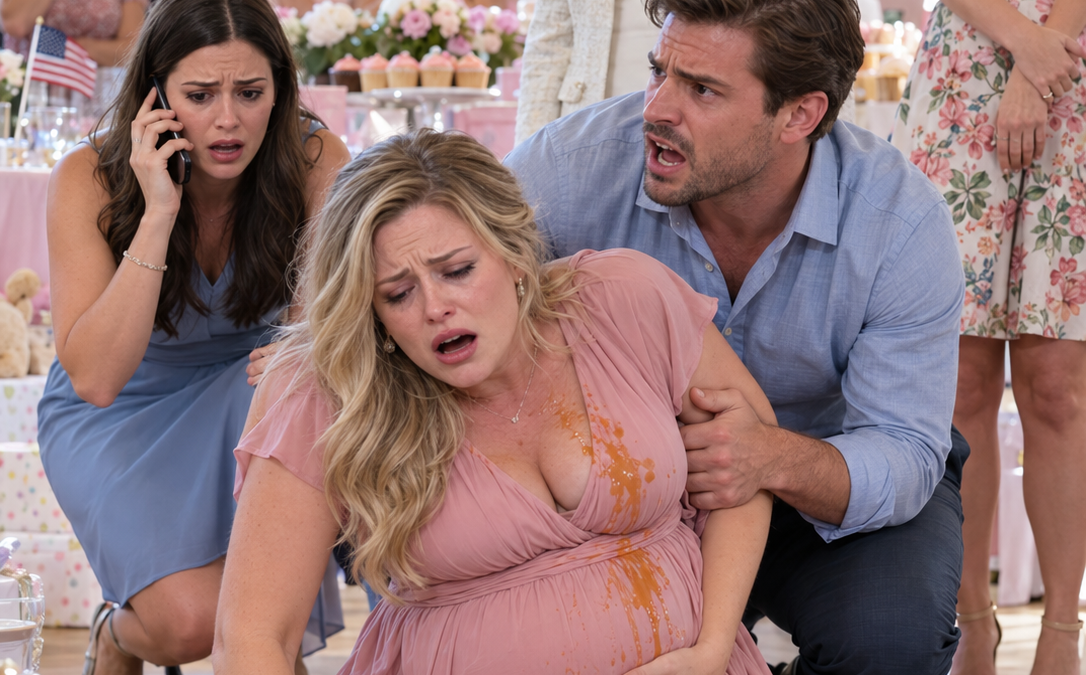
Twenty minutes later, I was on the floor, thirty-two weeks pregnant, unable to get my legs underneath me.
My husband was calling 911. My best friend was kneeling beside me, trying to keep me conscious.
And my mother was telling everyone I was being dramatic.
“She’s pregnant, David. Women get dizzy. You don’t need an ambulance every time Emma wants attention.”
My father stood beside her, looking annoyed.
“She’s managed to turn her own baby shower into a medical emergency. Unbelievable.”
Then I heard my sister laugh.
“Well, she always wanted to be the center of attention.”
I remember that sentence more clearly than I remember the paramedics arriving.
Because Megan was the person who had given me the drink.
And when I looked toward her, she wasn’t frightened.
She was watching.
My name is Emma Carter. I was thirty years old, living in Columbus, Ohio, and expecting my first child with my husband, David.
I had spent most of my life making excuses for my family.
That afternoon, I nearly paid for those excuses with my baby’s life.
But to understand why I accepted that drink, even though every experience I’d ever had with Megan told me not to trust her, you need to understand how our family worked.
Megan is three years older than I am.
In our house, those three years apparently entitled her to everything.
When I was thirteen, I received a partial scholarship to a summer science program. I had spent months preparing my application, and all I needed was help covering the remaining tuition.
My father barely looked at the paperwork.
“Money doesn’t grow on trees, Emma.”
Three weeks later, my parents threw Megan an enormous sixteenth-birthday party.
There was a new car in the driveway with a red bow across the hood.
When I asked how they could afford it, Mom gave me a look.
“Don’t ruin your sister’s birthday because you’re jealous.”
That was the first time I understood that money was only tight when I needed something.
The rules followed us into adulthood.
When Megan failed a college class, my parents called the professor and complained.
When I earned straight A’s, Dad said, “That’s what you’re supposed to do.”
When Megan needed a new laptop, they bought one.
When mine broke during nursing school, I picked up extra shifts at the campus coffee shop and purchased a refurbished Dell.
Megan attended a private art college out of state, with tuition, housing, and spending money covered by our parents.
I went to a state university on scholarships, student loans, and whatever I could earn.
Some mornings, I opened the coffee shop at five. At night, I waited tables until closing, then went home and studied anatomy while eating whatever food the restaurant let employees take home.
Megan called me once from a beach house in Florida.
“Can you Venmo me fifty bucks? Dad hasn’t transferred my allowance yet.”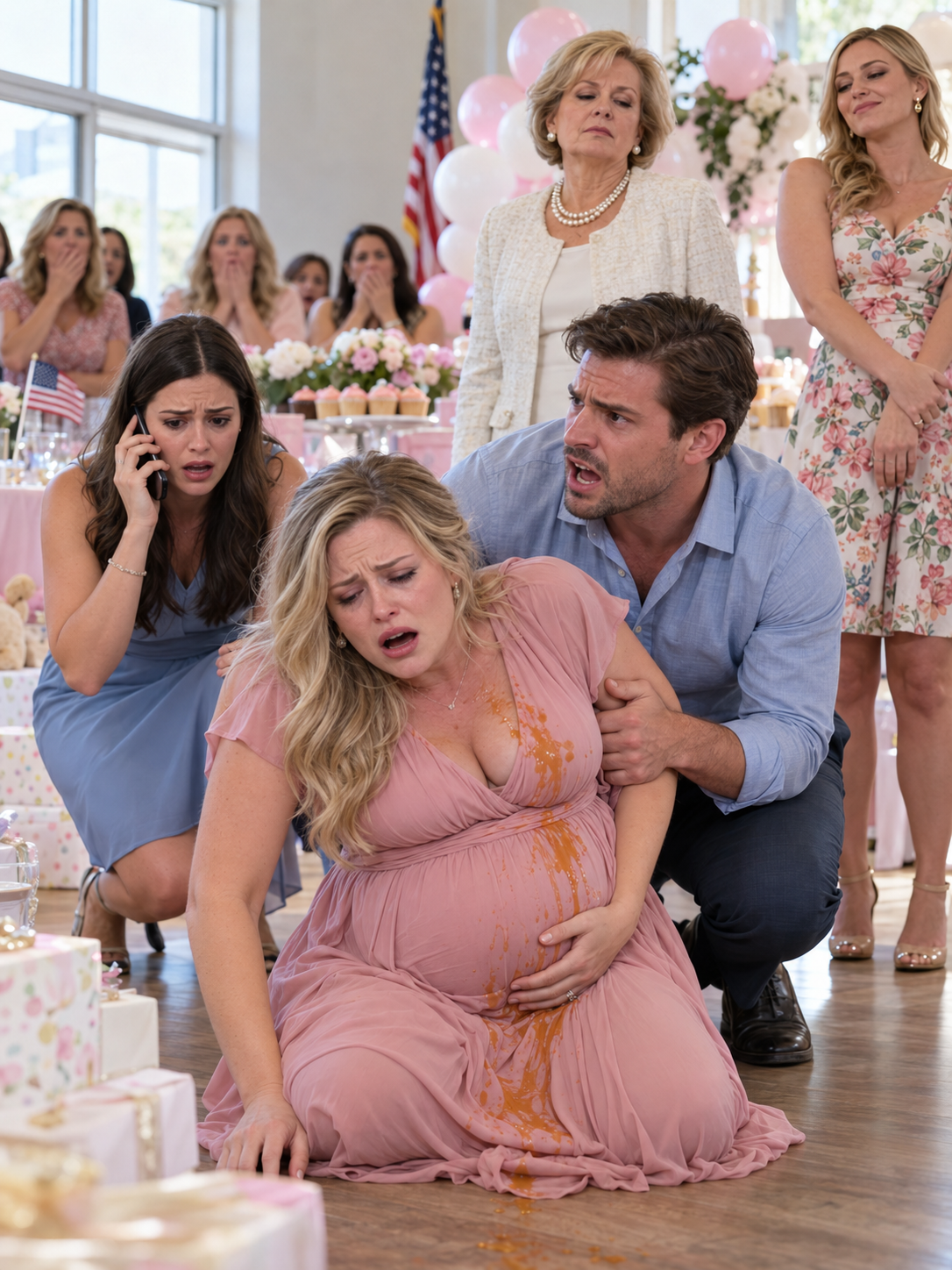
I had thirty-eight dollars in checking.
I sent her twenty.
That’s how thoroughly my parents had trained me.
They never actually said Megan’s needs were more important.
They didn’t have to.
“Your sister’s going through something.”
“You’re better at handling stress.”
“Stop keeping score.”
“Family helps family.”
Somehow, I was always the family member expected to help.
By the time I graduated and started working as a nurse in Columbus, I had stopped asking my parents for anything.
I rented a studio apartment with unreliable air conditioning, drove a ten-year-old Honda, and packed my lunch for every hospital shift.
I saved enough for a down payment on a small condo when I was twenty-eight.
The kitchen cabinets were outdated. The bathroom tiles were ugly. The previous owner had apparently considered beige carpeting a personality trait.
I loved every square foot.
David and I painted the place ourselves.
We bought furniture secondhand, replaced fixtures using YouTube tutorials, and celebrated our first working dishwasher with takeout Chinese food on the living room floor.
David was someone I’d known since our college anatomy classes. We started dating after graduation, when we were both working in the same hospital system.
He knew about my family.
He simply couldn’t understand why I kept giving them opportunities to hurt me.
“They don’t treat you like their daughter,” he told me once after my father called to demand that I cover Megan’s overdue rent.
“Then why do they keep calling me?” I asked.
“Because you keep answering.”
I didn’t have a response.
We got married in a small garden ceremony with close friends and a few relatives.
My parents didn’t contribute a dime.
Megan arrived forty minutes late, complained about the seating arrangement, and left before we cut the cake.
My mother later told me I should apologize.
Apparently, Megan had felt excluded because I hadn’t asked her to be maid of honor.
I was twenty-eight years old, newly married, and still being told to fix something my sister had ruined.
Then I got pregnant.
David was in the kitchen making coffee when I showed him the positive test.
He stared at it, then at me.
“Are we actually doing this?”
I laughed.
“Apparently.”
He hugged me so tightly I had to remind him I needed oxygen.
For the first time, I wasn’t thinking about whether my parents approved of my decisions.
I was thinking about a crib, daycare, tiny socks, and the fact that we would soon need a bigger place.
When we told my parents, Mom’s first words were, “Megan is going to be so excited to become an aunt.”
Dad asked if we could afford a baby.
Megan’s reaction was more revealing.
“Wow. So I guess everyone’s supposed to act like you’ve accomplished something.”
David heard her.
“What exactly is your problem?”
She smiled.
“Relax. It’s a joke.”
She used that explanation whenever she said something cruel in front of witnesses.
A few weeks later, she visited our condo.
I was painting small wooden decorations for the nursery while David assembled the crib.
Megan walked around the room, examining the yellow walls and folded baby blankets.
“So you’re really doing the whole perfect-family thing.”
I kept painting.
“We’re having a baby, Megan. That’s generally what people do.”
She touched the crib rail.
“You think this baby is going to fix your life?”
David put down his screwdriver.
“Okay. That’s enough.”
Megan rolled her eyes.
“God, you two are sensitive.”
She left twenty minutes later.
That night, Mom called to tell me I’d hurt Megan’s feelings.
I put the phone on speaker so David could hear.
“Mom, she insulted me in my own house.”
“She’s having a difficult year.”
“She’s thirty-three. She’s been having a difficult year since high school.”
“Emma!”
I ended the call.
David looked genuinely impressed.
“What?”
“You hung up.”
“Don’t make it a federal holiday.”
But I was smiling.
I thought I was finally learning how to handle them.
I had no idea how much worse things would get.
By my third trimester, Megan had lost another job.
Mom called repeatedly, suggesting I send her money.
I told her we were saving for the baby.
“Your sister needs help now,” she said. “The baby isn’t even here yet.”
That sentence made my decision for me.
“No.”
Mom went quiet.
“What did you say?”
“I said no. I’m not paying Megan’s bills.”
Dad called fifteen minutes later to explain how selfish I’d become.
Megan stopped speaking to me for almost two weeks.
It was the most peaceful two weeks of my pregnancy.
Then Rachel started organizing my baby shower.
Rachel had been my best friend since we were fifteen. She worked in healthcare, knew my family history, and had absolutely no patience for Megan.
She reserved a community hall in Columbus, arranged decorations, and coordinated food with coworkers and neighbors.
David handled the cake and helped set everything up.
I wanted a small party.
Rachel had other ideas.
“You’ve spent your whole life pretending you don’t deserve anything,” she said. “You’re getting cupcakes and balloons. Deal with it.”
Megan found out about the celebration through Mom.
Suddenly, she wanted to help.
Specifically, she wanted to handle the drinks.
“I can do a cute beverage station,” she announced in our family group chat. “Orange juice, sparkling water, something fancy for the guests who can actually drink.”
I told Rachel I didn’t think it was necessary.
Rachel offered to handle everything herself.
But Mom called and turned the situation into another family argument.
“Your sister is making an effort, Emma. Why do you always assume the worst?”
“Because I know her.”
“She’s trying to be nice.”
Dad joined the conversation.
“Let her bring the drinks. Don’t make this difficult.”
So I agreed.
It seemed easier than arguing over orange juice.
That was my mistake.
The shower took place on a Saturday afternoon.
I wore a pale pink maternity dress and comfortable flats because my feet had started swelling.
David drove us to the community hall with a car full of decorations, disposable plates, and enough diapers to suggest we were opening a wholesale business.
By noon, the room looked beautiful.
Pink and white balloons lined the entrance. Cupcakes covered one long table, and a stack of wrapped presents sat beside a chair Rachel had decorated for me.
Friends from the hospital arrived with gifts.
Our neighbors came.
A few cousins showed up, along with several people I hadn’t seen since our wedding.
For about an hour, I forgot all about Megan.
I opened a set of baby blankets, laughed at David trying to guess the price of diapers, and watched Rachel enthusiastically explain a game nobody understood.
Then the doors opened.
Megan walked in wearing a bright floral dress and expensive heels, carrying a tray of drinks.
My parents followed.
Mom announced, loud enough for several tables to hear, “Look what Megan made for everyone!”
Rachel was standing beside me.
“Congratulations,” she muttered. “Your sister discovered orange juice.”
I nearly laughed.
Megan came directly toward me.
She selected one glass from the tray and pressed it into my hand.
“For my favorite little sister.”
“I’m your only little sister.”
“Then you’re winning by default.”
A few guests chuckled.
Megan kissed my cheek.
“Let me take care of you today, Emma.”
There was something about the way she said it that bothered me.
She had never offered to take care of me before.
But people were watching, and I didn’t want another argument.
I took a sip.
The juice tasted unusually sweet.
I set the glass down and continued talking to a coworker about maternity leave.
Several minutes later, Rachel pulled me aside.
“Something weird happened.”
“What?”
“I saw Megan talking to your mother outside the kitchen. They stopped when I walked up.”
I shrugged.
“They probably found a new reason I’m selfish.”
Rachel didn’t smile.
“Just keep your distance.”
I told her I would.
Then I returned to my guests.
We played another game. David answered questions about my pregnancy cravings, getting almost everything wrong.
Apparently, he believed I had developed a craving for pickles.
I’d eaten exactly one pickle in seven months.
I stood to thank everyone for coming.
That’s when I noticed my hands were shaking.
At first, I thought I needed to sit down.
The room felt too warm, and the overhead lights seemed painfully bright.
I reached for the back of a chair.
Rachel looked up.
“Emma?”
“I’m okay.”
I wasn’t.
My head felt heavy, and I couldn’t focus on her face.
David came over.
“What’s wrong?”
“I don’t know.”
He took my elbow.
“Sit down.”
I tried.
My knees didn’t cooperate.
The chair was right behind me, but somehow I couldn’t reach it.
I heard the glass fall.
Then David caught me under my arms as I went down.
Someone screamed.
Rachel was already calling 911.
I could hear her giving the dispatcher our location.
“She’s thirty-two weeks pregnant. Sudden dizziness, altered consciousness. We need an ambulance.”
My mother pushed through the guests.
“Oh, for heaven’s sake. She’s probably dehydrated.”
Rachel turned toward her.
“Linda, move.”
“Excuse me?”
“Move. You’re blocking the paramedics when they get here.”
Dad started complaining about everyone’s reaction.
Megan stood behind him.
And while David held me on the floor, she said the sentence I would remember for the rest of my life.
“Maybe Emma shouldn’t have made this whole day about herself.”
I tried to look at her.
I couldn’t keep my eyes open.
The next clear memory I have is an oxygen mask against my face.
I was in an ambulance.
David sat beside me, holding my hand.
“Emma, can you hear me?”
I nodded.
“Baby?”
“She’s moving,” he said. “I felt her kick before we left. They’re checking everything at the hospital.”
Our baby had been moving all morning.
Now I couldn’t tell whether she was moving at all.
I tried to put my hand on my stomach, but the paramedic was checking my blood pressure.
David kept talking.
He told me where we were, what the medics were doing, and that he wasn’t going anywhere.
I don’t remember much of the drive.
I remember staring at the ambulance ceiling and wondering whether I had just lost my daughter.
At the hospital, Dr. Melissa Green ordered bloodwork, an ECG, fetal monitoring, and further testing to investigate the sudden collapse.
I knew enough from nursing to understand that fainting during pregnancy could have several causes.
I also knew how rapidly an unexpected change in consciousness could become dangerous.
David told the medical team everything he had seen.
Including the drink.
Hours later, Dr. Green came back.
She closed the door.
“Emma, we found evidence of a sedating substance in your system.”
I stared at her.
“What substance?”
She explained what the initial results showed, and that additional confirmation was necessary.
Then she asked whether I’d taken any prescription medications or supplements that day.
I hadn’t.
Nothing beyond what my obstetrician had approved.
David spoke first.
“Could somebody have put it in her drink?”
“It’s one possibility,” Dr. Green said. “But we need to establish exactly what happened.”
She explained that the exposure could have been dangerous, particularly because of the pregnancy, and that the team would continue monitoring both of us.
I looked toward the fetal monitor.
The heartbeat was there.
Fast, regular, unmistakable.
I started crying.
David moved beside the bed and put his hand over mine.
For a few minutes, we were both too relieved to say anything.
Then my parents arrived.
Mom came straight to my bedside.
“Emma, honey, how are you feeling?”
I told her what Dr. Green had found.
She stopped rubbing my hand.
“What exactly did the doctor say?”
“That there’s a sedative in my blood. Something I didn’t take.”
Dad looked at David.
“Well, there must be an explanation.”
“There is,” David said. “We’re trying to find it.”
Mom leaned closer.
“Just don’t start making accusations against Megan.”
I stared at her.
“I haven’t even said her name.”
“Well, I know how you get.”
Dad stepped forward.
“Your sister has enough problems. If you turn this into some ridiculous police investigation, you’re going to destroy the family.”
I glanced at the IV in my arm.
Then at the fetal monitor.
Then back at my father.
“Are you listening to yourself?”
“Watch your tone.”
David stood up.
“Get out.”
Dad looked astonished.
“This is a private family conversation.”
“She’s my wife,” David said. “And she’s in a hospital bed because someone may have drugged her. You don’t get to come in here and threaten her.”
Mom turned toward me.
“Emma, are you really going to let him speak to us that way?”
I looked at David.
For once, I didn’t ask him to apologize.
“Please leave,” I said.
Mom’s expression changed.
She looked at me as though I’d just done something unforgivable.
“You’ll regret choosing outsiders over your own family.”
David opened the door.
“That’s enough.”
They left.
And I realized something that was almost harder to accept than the test results.
My parents were more frightened of Megan facing consequences than they were of losing me.
The next few days were exhausting.
Dr. Green explained that my condition was improving and that our baby’s monitoring remained reassuring.
Rachel contacted the guests and started collecting what people remembered.
She wrote down who had seen Megan handling the drinks, where everyone had been standing, and what had happened before I collapsed.
One neighbor remembered seeing Megan pour drinks alone near the kitchen.
Another guest had overheard Mom telling Megan to be careful because she didn’t want anyone noticing something.
Nobody knew what that conversation meant.
But Rachel included it in her notes.
David called his cousin Mark, a Columbus police officer, to ask how we should proceed.
Mark was careful not to involve himself officially because we were family.
He told us to report the incident, preserve documents, and give investigators the names of witnesses.
So we did.
Detective Harris took my statement.
The confirmed toxicology results showed that I’d been exposed to a substance I had not been prescribed.
Rachel gave him her notes.
David supplied the contact information for the shower guests.
And I described the exact moment Megan handed me the orange juice.
When Detective Harris asked whether my sister and I had a history of conflict, I almost laughed.
“How much time do you have?”
He didn’t laugh back.
“As much as it takes.”
For the first time, someone was asking what had happened without telling me to consider Megan’s feelings.
When I was discharged, I went home under strict instructions to rest and follow up with my obstetrician.
I started keeping a folder of everything related to the incident.
Medical paperwork.
Messages.
Witness names.
A written account of what I remembered.
Then Megan began posting on Facebook.
Some people will do ANYTHING to destroy their own family.
Another post said that jealousy could turn people into liars.
Mom shared both.
I didn’t respond.
Rachel wanted to.
“Please let me comment,” she said. “I have several suggestions, none of them polite.”
“No.”
“Just one?”
“Rachel.”
“Fine. You’re no fun.”
A week later, my parents invited everyone to their house for what they called a family reconciliation.
David said absolutely not.
Rachel said she’d rather spend Sunday afternoon at the DMV.
But I decided to go.
Not alone.
David came with me, and Rachel insisted on coming too.
When we arrived, Megan was sitting between my parents on the couch.
Several aunts, uncles, and cousins were gathered around the living room.
Nobody had told me it would be an audience.
Dad stood and cleared his throat.
“We’re here because Emma has made some very serious accusations against her sister.”
Mom nodded.
“And it’s time for those accusations to stop.”
Megan looked at me with a practiced expression of concern.
“Emma, I know pregnancy is stressful. But you can’t keep blaming me for everything.”
I set my folder on the coffee table.
“That’s interesting, because I haven’t blamed you for everything.”
I pulled out the toxicology report.
“I’m blaming someone for what happened at my baby shower. And I want to know why you were the person who handed me that drink.”
Megan stopped smiling.
Then she leaned forward.
“You’re really going to do this here?”
“You arranged an audience. I brought paperwork.”
Rachel made a small noise beside me.
I continued.
“These are the hospital results. These are the names of people who saw Megan preparing the drinks. And these are statements from guests who witnessed what happened.”
Mom reached for the folder.
I pulled it away.
“You’re not taking anything.”
Dad raised his voice.
“This family doesn’t need outsiders getting involved!”
“Then you probably shouldn’t have invited twenty relatives to help you intimidate me.”
A cousin stood up.
“I was at the shower. I saw Megan pouring the juice.”
Another relative spoke.
“I heard Linda tell her to be careful outside the kitchen.”
Mom snapped, “That doesn’t mean anything!”
“Then explain what you meant,” I said.
She opened her mouth.
Nothing came out.
Megan suddenly stood.
“This is insane. Emma has always been jealous of me!”
I looked at her.
“Jealous of what, Megan? Your unpaid credit cards? Your fifth career change? The car Mom and Dad bought because the last one got repossessed?”
Her face hardened.
“You think you’re better than me because you married a nurse and bought a cheap condo.”
“No. I think I’m responsible for my choices. There’s a difference.”
Dad ordered me to apologize.
I closed my folder.
“We’re done.”
As David helped me stand, Megan moved toward me.
“You’ve been trying to ruin my life for years.”
I looked directly at her.
“Then tell the police what happened.”
She stepped back.
For the first time that afternoon, she didn’t have a comeback.
We left.
I thought the confrontation was over.
I was wrong.
The following evening, someone pounded on our condo door.
David checked the peephole.
“It’s Megan.”
I told him not to open it.
But she was already shouting loudly enough for the neighbors to hear.
“EMMA! I KNOW YOU’RE IN THERE!”
David opened the door a few inches and told her to leave.
Megan shoved past him.
She marched into our living room, furious.
“You think you can destroy me with your stupid little folder?”
I stood beside the couch.
“You need to leave.”
“No. You’re going to listen to me.”
David took out his phone.
“Last warning, Megan.”
She ignored him.
“Mom and Dad told me to come here and fix this. You need to stop talking to the police.”
“That’s not happening.”
She laughed.
“You’ve always been pathetic. You think because you’re pregnant, everybody has to worship you?”
I didn’t answer.
She moved closer.
“You’ve spent your whole life making me look bad.”
“By working?”
“By acting like you’re better than everyone!”
I looked at her.
“Megan, I ended up in the hospital. My daughter could have died.”
She waved her hand.
“You’re fine now.”
And that was when I understood how little she cared.
David had already called Rachel, who lived nearby.
When Rachel arrived, Megan was still shouting.
Rachel stepped into the room with her phone in her hand.
“Go ahead,” she said. “Tell us what you came here to say.”
Megan turned toward her.
“Put that away.”
Rachel didn’t move.
“Why?”
“Because this is a private conversation!”
“Then stop yelling loud enough for the entire building to hear.”
Megan looked back at me.
Her face was flushed.
Her hands were shaking.
“If you don’t withdraw that report, I’m telling everyone you set me up.”
I stood still.
“How?”
She pointed at me.
“You wanted everyone to think I was some kind of monster.”
“Then explain what you did.”
“I was trying to help you!”
“Help me how?”
She stepped forward.
And then she said the words that changed the entire investigation.
“Fine! I slipped something into your orange juice. But it wasn’t supposed to hurt you!”
Rachel’s phone was still recording.
David stopped moving.
And Megan, realizing what she’d just admitted, looked straight at the screen.
PART 2 — THE CONFESSION THEY COULDN’T ERASE
Megan stared at Rachel’s phone.
“Turn that off.”
Rachel didn’t move.
Megan looked at David.
“Tell her to turn it off!”
David folded his arms.
“You just admitted to drugging my pregnant wife.”
“I didn’t say that!”
“You said you put something in her juice.”
“I said it wasn’t supposed to hurt her!”
I watched her struggle to find another explanation.
For thirty years, I’d seen Megan escape trouble by crying, lying, or convincing our parents that someone else was responsible.
This time, she’d admitted what she’d done in front of three witnesses.
And she knew it.
“Emma,” she said, suddenly quieter. “Come on. You know me.”
I couldn’t believe she was trying that approach.
“Yes, Megan. That’s the problem.”
She moved toward the couch.
“I just wanted you to calm down. You were acting like some kind of celebrity because you’re having a baby.”
“So you decided to put something in my drink?”
“It wasn’t a big deal!”
David took one step toward her.
“My wife lost consciousness. She was taken to the emergency room. Doctors spent hours monitoring our baby.”
Megan pointed at him.
“Stay out of this!”
“No.”
“This is between sisters!”
David shook his head.
“You made it about my family when you endangered them.”
Rachel was still recording.
Megan noticed and lunged toward her phone.
Rachel backed away.
“Don’t touch me.”
David moved between them.
“You’re leaving. Now.”
Megan’s expression changed again.
The anger disappeared, replaced by something I’d seen since childhood.
She started crying.
“Emma, please. Mom and Dad will be devastated.”
I stared at her.
“Mom and Dad told me not to involve the police before they even knew what the test results were.”
“They were trying to protect the family.”
“Which part of the family, Megan?”
She didn’t answer.
I continued.
“You watched me collapse. You heard people calling for an ambulance. And you stood there making jokes.”
Her crying stopped.
“You’ve always been so dramatic.”
That did it.
I picked up my phone.
“David, call the police if she won’t leave.”
Megan’s face hardened immediately.
“You wouldn’t dare.”
I looked at her.
“You came into my home and admitted to drugging me. What exactly did you think would happen?”
She grabbed her purse.
“You’re going to regret this.”
She walked toward the door, then turned back.
“Mom and Dad are never going to forgive you.”
I almost laughed.
“You really think that’s what I’m worried about?”
She left, slamming the door.
David locked it.
For several seconds, none of us spoke.
Then Rachel looked down at her phone.
“I got all of it.”
She played the relevant section.
Megan’s voice filled our living room.
I slipped something into your orange juice.
There it was.
Not an accusation.
Not a family rumor.
Her own admission.
I sat down because my legs had started shaking.
David knelt in front of me.
“Are you okay?”
I shook my head.
“Not really.”
He took my hand.
“Do you need to call your doctor?”
“No. I just need a minute.”
Rachel sat beside me.
“Emma, listen. We need to make a copy of this recording and get it to Detective Harris.”
I nodded.
Then I looked at her.
“You know what scares me?”
“What?”
“That if she hadn’t admitted it, part of me might eventually have believed my parents.”
Rachel set her phone on the coffee table.
“Then it’s a good thing they don’t get to decide what’s true.”
The following morning, David and I met with Detective Harris.
Rachel came too.
We handed over the recording and explained what had happened in our condo.
He listened without interrupting.
When Megan’s admission played, he made a note.
Then he played it again.
“Did she explain what she used?” he asked.
“No,” I said. “Only that she’d put something in my drink.”
“Did she make any physical threats?”
“She said I’d regret reporting her. She also tried to grab Rachel’s phone.”
He wrote that down.
“We’ll need the original recording, along with your statements. We’ll also continue checking the medical findings and interviewing witnesses.”
I looked at him.
“Is that enough?”
“It’s significant evidence,” he said. “But I don’t want to promise you a particular outcome before the investigation is complete.”
That answer made me trust him more.
He wasn’t my father, promising Megan would be fine.
He wasn’t my mother, telling me to forget what had happened.
He was doing his job.
Over the next several weeks, detectives interviewed guests from the shower.
They spoke with Rachel, David, and the people who’d seen Megan handling the drinks.
Medical records were reviewed.
Investigators also examined the recordings and the statements we’d provided.
Megan hired an attorney.
Then my parents started calling.
I stopped answering.
Mom left a voicemail accusing me of humiliating Megan.
Dad demanded that I withdraw my complaint.
When neither worked, they tried David.
He listened to my father for less than a minute before ending the call.
“What did he say?” I asked.
“He said I was turning you against your family.”
I stared at him.
“Did you explain that I’m capable of making my own decisions?”
“I told him you made one. And he should start respecting it.”
Then he blocked the number.
I wished I could say I felt instantly relieved.
I didn’t.
I had spent so many years responding whenever my parents were angry that silence felt wrong.
I checked my phone constantly.
I rehearsed explanations I didn’t owe anyone.
Sometimes I opened Mom’s messages and started typing a reply before remembering she wasn’t asking whether I was safe.
She was asking me to protect Megan.
Again.
One evening, I was sitting at our kitchen table sorting baby clothes when a new message appeared.
It was from my mother.
Your sister is falling apart. Are you happy now?
I stared at the screen.
Then I typed:
I was the one in the ambulance, Mom.
Her response arrived almost immediately.
And you’re fine. Why can’t you let this go?
I read it twice.
Then I took a screenshot for my records and blocked her.
David came into the kitchen carrying two mugs of decaf coffee.
“Everything okay?”
I handed him the phone.
He read the message.
“Wow.”
“That’s my mother.”
He sat beside me.
“No, Emma. That’s someone asking you to excuse something she would never excuse if it happened to Megan.”
I didn’t argue.
A few days later, Detective Harris called.
The case was moving forward.
Megan would face criminal charges.
I was standing in the nursery when I heard the news.
The crib was assembled. Baby clothes were folded in the dresser. A package of diapers sat unopened beside the changing table.
For a moment, I couldn’t speak.
“Emma?” Detective Harris asked.
“I’m here.”
“Are you okay?”
“Yes. Thank you for calling.”
After I hung up, David found me sitting in the rocking chair.
“What happened?”
I told him.
He sat on the floor beside me.
Neither of us celebrated.
There was nothing enjoyable about having my sister charged with a serious crime.
I was relieved that the investigation hadn’t disappeared into the same familiar excuses.
But I also knew Megan wasn’t the only person I’d lost.
My parents had made their position painfully clear.
A criminal case didn’t matter to them nearly as much as the possibility that their favorite daughter might face consequences.
Soon afterward, my father left one final voicemail.
“If you go through with this, don’t ever call yourself our daughter again.”
I saved it.
Then I stopped checking whether they’d contacted me.
For the first time, I had more important things to do.
I was still pregnant.
Our baby was due soon.
And I refused to spend the rest of my pregnancy arguing with people who had already decided my safety was negotiable.
My obstetrician continued monitoring me carefully.
Every reassuring appointment mattered.
I asked questions that probably sounded excessive, but nobody at the office treated me as difficult.
Dr. Green checked in on my recovery and reminded me to follow my pregnancy care team’s instructions.
Rachel started coming by on weekends.
Sometimes she brought groceries.
Sometimes she sat with me while I folded baby clothes.
Once, she arrived carrying three enormous Target bags.
“What is all that?”
“Diapers.”
“We already have diapers.”
“These are backup diapers.”
“Rachel, are you expecting a national diaper shortage?”
“I’m expecting you to be exhausted and unwilling to go shopping.”
She was right.
David installed the car seat.
I packed my hospital bag.
We practiced the route to the maternity unit even though we both worked in healthcare and knew exactly where the hospital was.
Normal things.
Ordinary things.
Things I had almost lost.
Our daughter arrived several weeks later.
The delivery wasn’t the perfectly calm experience I’d imagined.
I was exhausted, frightened, and desperate to hear that she was healthy.
But when the nurse placed her in my arms, I stopped thinking about everything else.
She had dark hair.
A tiny, irritated expression.
And absolutely no patience for being cold.
David laughed when she started crying.
“She sounds like you when the coffee machine breaks.”
“David.”
“What? It’s a strong resemblance.”
I wanted to argue, but I was too busy looking at her.
Her fingers wrapped around one of mine.
I held her close.
“Hi, sweetheart,” I whispered. “I’m your mom.”
David bent down and kissed the top of her head.
We stayed like that until the nurse came to check on us.
My parents weren’t there.
Neither was Megan.
I had worried that their absence would ruin the day.
It didn’t.
Rachel visited when we were ready for guests.
She walked into the room, saw the baby, and immediately began crying.
“Oh, great,” I said. “Another emotional person.”
“Shut up and let me hold my niece.”
I laughed and carefully handed her over.
Watching Rachel hold my daughter, I remembered every time she’d defended me when we were teenagers.
She had been beside me when my parents ignored my achievements.
She’d helped me move into my first apartment.
She’d stood next to me at my wedding.
And she’d been the person who called 911 at my baby shower while my mother complained about the inconvenience.
I knew exactly what kind of people I wanted around my daughter.
The criminal case continued after she was born.
There were meetings with prosecutors, questions about witnesses, and court dates that kept changing.
I learned that criminal proceedings didn’t move according to the speed of my anger.
Some weeks, I heard very little.
Other weeks, a phone call or legal notice brought the whole experience back.
I also started counseling.
Not because I needed someone to convince me Megan had hurt me.
That much was established.
I needed help understanding why I’d spent so many years believing that protecting my sister was more important than protecting myself.
My therapist asked me something during one appointment that I thought about for days.
“What would you tell your daughter if her sister treated her the way Megan treated you?”
I answered immediately.
“I’d tell her she didn’t have to tolerate it.”
“Would you tell her to keep the peace?”
“No.”
“Would you ask her to sacrifice her health or safety to protect the other child’s reputation?”
“Of course not.”
The therapist let me consider my own answers.
I went home that afternoon and held my daughter for a long time.
When the case finally reached trial, she was several months old.
David’s aunt offered to watch her while we attended court.
Rachel came with us.
I wore a navy dress and low heels.
My hands shook as we walked through security.
David noticed.
“You don’t have to pretend this is easy.”
“I know.”
He took my hand.
“Whatever happens in there, we know what happened.”
I nodded.
That mattered.
Because for most of my life, I’d been the only person expected to apologize when Megan did something wrong.
Now I was walking into a courtroom where facts mattered more than our parents’ preferences.
Megan entered with her attorney.
She wore a conservative suit, her hair pulled back, and almost no makeup.
My parents followed her.
Mom looked older than I remembered.
Dad looked straight ahead.
Neither acknowledged me.
For one ridiculous second, I wanted to walk over and ask whether they’d met their granddaughter.
Then I remembered that they’d made no effort to see her.
I stayed in my seat.
The prosecution laid out the events of the baby shower.
The drink.
My collapse.
The medical findings.
The witnesses.
The admission Megan had made in our living room.
Dr. Green testified about my condition, the toxicology results, and the potential risks associated with the exposure.
She was precise.
She didn’t speculate about Megan’s motives.
She described what the medical evidence supported.
Rachel testified next.
She explained how Megan handed me the drink and what happened when I began losing consciousness.
She described my parents dismissing the emergency.
Then she identified the recording from our condo.
I looked toward Megan as the audio played.
Her own voice filled the courtroom.
I slipped something into your orange juice. But it wasn’t supposed to hurt you.
Megan stared down at the table.
Her attorney challenged the interpretation of the recording.
He argued that her words didn’t establish an intention to kill me and questioned how the prosecution connected the exposure to her actions.
The case involved serious legal questions, not simply whether Megan had been cruel.
But the recording wasn’t the only evidence.
The court heard witness testimony, medical findings, and the account of what happened before and after the shower.
When it was my turn, I took the stand.
I was nervous.
My palms were damp, and I had to ask for a glass of water before answering the first question.
The prosecutor asked me to describe the day of the shower.
I told the court about Megan arriving late.
About the glass of juice.
About feeling dizzy.
About David catching me before I hit the floor.
Then I described waking in the ambulance, frightened that my baby might not survive.
I kept my answers specific.
I didn’t need to exaggerate anything.
The facts were bad enough.
When the prosecutor asked about my parents’ reaction at the hospital, I looked briefly toward them.
Mom was staring at the floor.
“They told me not to accuse Megan,” I said.
“Why?”
“Because they were worried about what would happen to her.”
“How did that affect you?”
I paused.
“I had just been told that a drug was in my system. I was thirty-two weeks pregnant, and I didn’t know whether my baby was going to be okay.”
I looked toward the judge.
“My parents’ first concern was making sure I didn’t get Megan in trouble.”
The courtroom was quiet.
I continued.
“That’s how things always worked in our family. But this time, the consequences weren’t something I could ignore.”
Megan’s attorney questioned me about our history.
He suggested that years of sibling conflict had influenced how I interpreted Megan’s actions.
I acknowledged that we’d had problems.
Many problems.
But I wasn’t the person who’d put something in a drink.
And I wasn’t the person whose admission had been recorded.
After my testimony, David helped me back to my seat.
“You did great,” he whispered.
“I think I’m going to throw up.”
“Want some water?”
“No. I want to go home and hold our daughter.”
He squeezed my hand.
“We will.”
The trial concluded after the court heard the evidence and legal arguments.
Megan had waived her right to a jury trial, leaving the judge to decide the case.
The waiting afterward was worse than I expected.
Every time the phone rang, I wondered whether it was news from the courthouse.
I wanted the process over.
I wanted Megan held accountable.
Most of all, I wanted to stop arranging my life around what she’d done.
Then the day came for the verdict.
David sat on one side of me.
Rachel sat on the other.
My parents were across the aisle.
The judge reviewed the court’s findings.
She addressed the seriousness of deliberately administering a dangerous substance to a pregnant woman and the evidence supporting the prosecution’s case.
Then she announced the decision.
Megan was found guilty, including on the attempted-murder charge.
I heard Mom gasp.
Dad swore under his breath.
Megan turned sharply toward her attorney.
For a moment, she seemed unable to understand what had happened.
The person who had spent her entire life being rescued from consequences had finally reached a place where my parents couldn’t rescue her.
I didn’t smile.
I didn’t cheer.
I sat there holding David’s hand.
Megan looked back at me.
“You did this,” she said angrily.
Her attorney tried to quiet her.
But she kept staring.
“You destroyed this family!”
The judge brought the courtroom back to order.
I didn’t respond.
I had spent thirty years defending myself against that accusation.
I wasn’t going to start another argument in court.
After the verdict, the sentencing process followed.
Megan received a prison sentence.
My parents continued insisting that she had been treated unfairly.
Their relatives no longer responded with the same unquestioning sympathy.
Some apologized to me for ignoring what they’d witnessed for years.
Others remained silent.
I didn’t need all of them to agree with me.
The court had reached its decision.
And I had a daughter waiting at home.
My parents sent one final letter.
Mom wrote that I’d ruined Megan’s future.
Dad accused me of embarrassing the family.
Neither mentioned the baby shower.
Neither asked about my daughter.
I read the letter once, put it through our paper shredder, and went back to making dinner.
David watched me from the kitchen doorway.
“That’s it?”
“That’s it.”
“No reply?”
“No.”
He nodded.
“Good.”
I opened the refrigerator.
“Also, we’re out of milk.”
He smiled.
“I’ll go get some.”
It wasn’t a dramatic moment.
There was no speech.
No shouting.
Just me standing in my kitchen, deciding I didn’t need to spend another evening explaining myself to people who refused to listen.
A few weeks later, Rachel organized a small gathering at our condo.
Nothing extravagant.
Pizza, cupcakes, friends from work, and several relatives who’d supported us through the investigation.
Our daughter sat in her little bouncer wearing a ridiculous pink headband Rachel had purchased.
David kept checking whether she was comfortable.
Rachel kept telling him to stop hovering.
I sat on the couch and watched them argue about the proper temperature of baby formula.
For the first time in months, nobody was discussing Megan.
Nobody was asking me to forgive anyone.
Nobody was trying to convince me that my feelings were unreasonable.
We were simply enjoying an afternoon together.
At one point, Rachel sat beside me.
“You okay?”
I looked around the room.
David was laughing with friends near the kitchen.
Our daughter was asleep.
Someone had put an entire cupcake on a paper plate for me because I’d missed dessert earlier.
“Yeah,” I said. “I think I am.”
Rachel followed my gaze.
“You know, this is what your baby shower was supposed to be.”
I nodded.
“Yeah.”
She hesitated.
“Do you ever wish things had gone differently?”
I thought about the question.
Of course I did.
I wished Megan hadn’t hated me.
I wished my parents had treated both their daughters with the same concern.
I wished the baby shower had ended with leftover cupcakes and thank-you cards instead of an ambulance.
But those weren’t choices I could make for them.
“I wish they’d been different people,” I said.
Rachel nodded.
“That makes sense.”
Then she stood up to rescue David from a conversation about diaper brands.
I stayed on the couch, watching my daughter sleep.
I thought about the girl I’d been at thirteen, standing on the porch while Megan celebrated her new car.
About the college student who sent her last twenty dollars to a sister who never thanked her.
About the young woman who kept calling home, hoping that someday her parents would be proud.
I couldn’t go back and change those years.
But I could decide what happened next.
My daughter would never be asked to earn my affection by making herself smaller.
She would never be responsible for protecting someone who hurt her.
And if she came to me frightened, injured, or in trouble, I would listen before deciding who deserved defending.
Later that night, after our friends had gone home, I carried her into the nursery.
David followed with a clean blanket.
“Want me to take her?” he asked.
“In a minute.”
He kissed my cheek and went to finish cleaning the kitchen.
I settled into the rocking chair.
My daughter opened her eyes briefly, stretched one tiny hand, and fell asleep again.
I remembered Megan’s words in our living room.
You’re going to regret this.
I looked at the little girl in my arms.
For years, I’d regretted standing up for myself.
Every disagreement with my parents had left me wondering whether I should have stayed quiet.
Not anymore.
Megan had tried to take control of the one day meant to celebrate my child.
Instead, she’d lost control of the story she’d spent years telling about me.
I was not the selfish sister.
I was not the problem everyone needed to manage.
I was a woman who had survived something terrible, protected her child, and finally stopped accepting cruelty as the price of belonging to a family.
I adjusted the blanket around my daughter.
“You’re safe,” I whispered.
She slept through it.
And that was exactly how I wanted it.
She didn’t need to know what I’d fought through to hold her.
She only needed to grow up knowing that when she needed me, I would be there.