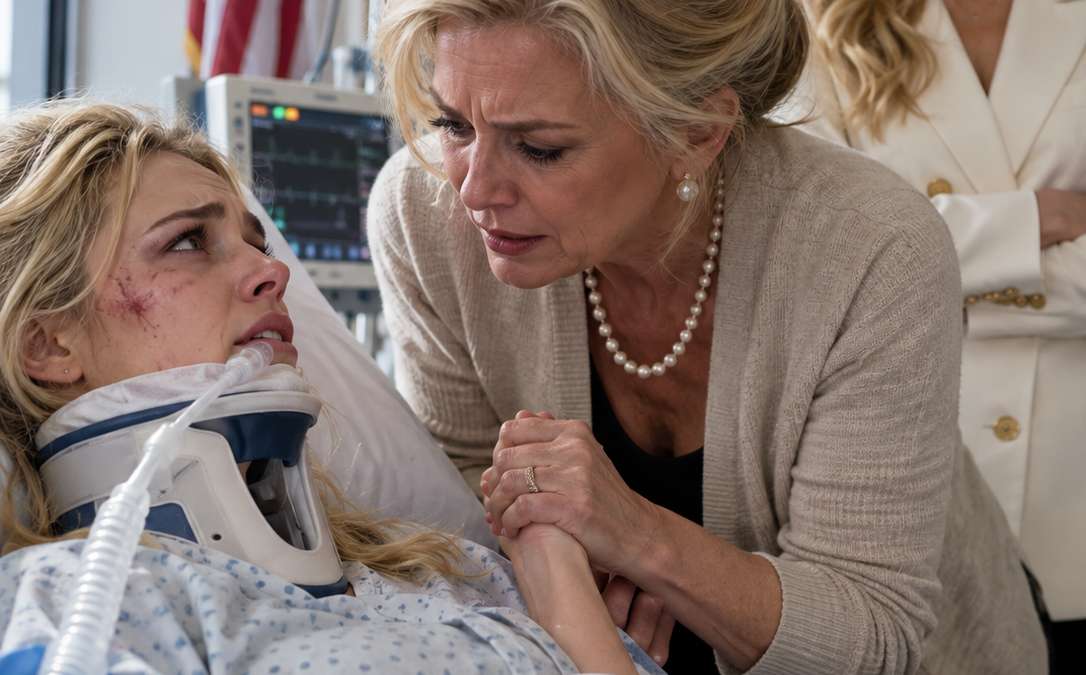
“Tell the police you slipped,” my mother whispered, digging her nails into my wrist. A breathing tube kept me silent; a neck brace held my shattered body still. Fourteen days earlier, my sister had shoved me off a forty-foot cliff. Now Mom wanted me to protect her daughter’s business. She didn’t know what the police had already found down there.
PART 1: MY SISTER PUSHED ME OFF A 40-FOOT CLIFF TO PROTECT HER INHERITANCE. WHEN I WOKE UP, MY MOTHER BEGGED ME TO LIE.
My mother waited until the ICU nurse stepped into the hallway before asking me to protect the woman who had pushed me off a cliff.
Not protect me.
Protect my sister.
“Tell the police you slipped, Sloane,” she whispered, gripping my wrist. “Fallon didn’t mean for any of this to happen. You can’t destroy her life over one mistake.”
I couldn’t answer.
There was a breathing tube down my throat, a brace securing my neck, and enough damage to my body that the doctors weren’t sure I’d ever walk normally again.
Fourteen days earlier, my sister had put both hands against my chest and shoved me backward over a forty-foot ravine.
And my mother’s biggest concern?
Fallon’s event-planning business.
I watched her glance toward the hospital door.
“Please,” she continued. “She’s barely sleeping. The police keep asking questions. If they arrest her, everything she’s worked for will be gone.”
I wanted to ask what she thought I had lost.
Instead, I looked at my mother and gave her the smallest nod I could manage.
Her shoulders dropped.
“Oh, thank God,” she whispered. “I knew you’d do the right thing.”
She kissed my forehead and hurried away to call Fallon.
What she didn’t know was that I had already decided exactly what I would tell the police.
And somewhere in an evidence room, inside a shattered smartphone recovered from the mountains, was the one thing my sister had forgotten to destroy.
But to understand why Fallon wanted me dead, you need to understand what my family considered love.
My name is Sloane Vance. I’m forty-two years old, and before everything happened, I was a regional logistics operations director for a major American supply-chain company.
I managed hundreds of truck routes, negotiated shipping contracts worth millions, and handled operational emergencies that could cost my employer six figures before lunch.
I was good at my job.
At home, apparently, I was an unpaid maintenance department.
My parents, Marin and Thatcher Vance, were retired. Dad had heart problems, arthritis, and a growing collection of prescriptions.
Mom had joint problems and a remarkable ability to operate her television remote while insisting she couldn’t possibly make a phone call to her insurance company.
So I handled everything.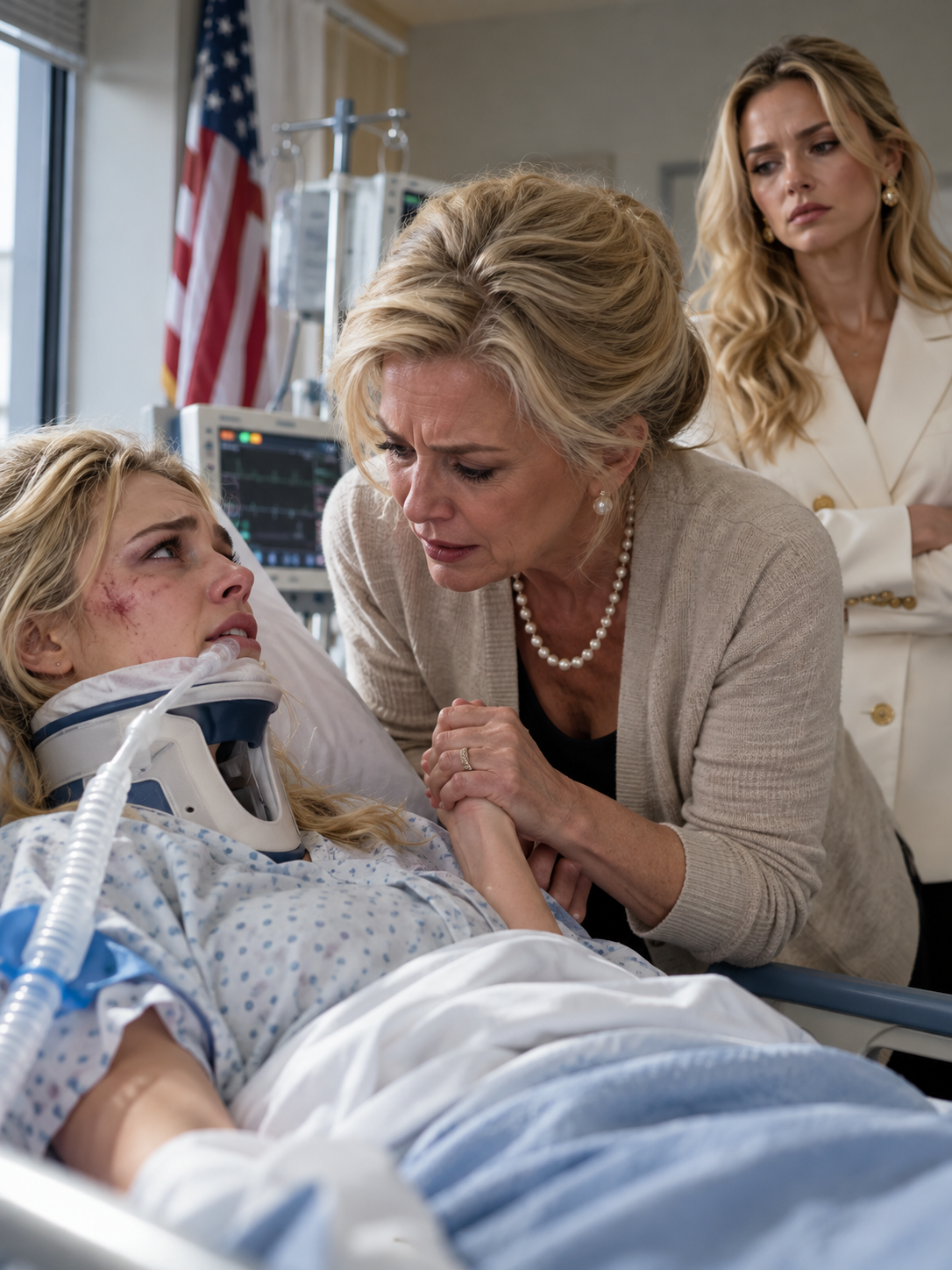
Cardiology appointments. Prescription refills. Grocery runs. Plumbing repairs. Medical bills.
One Friday, after working thirteen hours, I drove to their house because Dad couldn’t figure out why the dishwasher had stopped draining.
The problem was a clogged filter.
I fixed it in twelve minutes.
Mom looked up from her recliner.
“Since you’re here, could you clean the guest bathroom?”
I should have said no.
Instead, I asked where she kept the cleaning supplies.
That was my role in the family.
I solved problems. Other people created them.
And nobody created more expensive problems than my younger sister, Fallon.
At thirty-eight, Fallon owned a luxury event-planning and home-staging business.
At least, that was what her Instagram account claimed.
Her feed featured designer furniture, champagne towers, celebrity-style floral arrangements, and photographs taken beside expensive cars.
She leased a Porsche Cayenne, carried a Dior handbag, and treated a Starbucks latte like a business expense.
Mom called her our family’s entrepreneur.
Dad called her brilliant.
I called her when I needed someone to take him to his cardiology appointments.
She rarely answered.
Three weeks before everything changed, I spent a Sunday afternoon cleaning mold from Dad’s shower chair.
Fallon arrived around three wearing cream-colored designer trousers and heels that probably cost more than Dad’s monthly medication.
“Mom! I brought you something!”
She presented a gold-ribboned box filled with imported chocolate truffles.
“These were four hundred dollars,” she announced. “But when I saw them, I thought of you.”
Mom practically launched herself out of her chair.
“Oh, Fallon! You shouldn’t have!”
Fallon smiled.
“Nothing’s too good for my favorite mother.”
“I’m your only mother,” Mom laughed.
“Then you’re getting an excellent deal.”
They hugged.
Dad came in from the kitchen and started asking about her latest business contracts.
I stood there holding a bottle of bleach.
Fallon noticed me.
“Wow, Sloane. You look exhausted.”
“Good observation.”
“I’m serious. You need to start investing in yourself. Get your hair done. Buy some decent clothes.”
I looked down at my faded jeans.
“I was cleaning Dad’s bathroom.”
“Exactly. You spend your whole life working. No wonder you’re miserable.”
Mom gave me a warning look.
“She’s just trying to help, sweetheart.”
“Of course she is.”
I went into the kitchen to start dinner.
That’s where I spotted the receipt.
Fallon had left it beside her purse.
Four hundred dollars. Imported truffles. Premium credit card.
Cardholder: Marin Vance.
My mother had paid for her own gift.
I read the receipt twice.
Then I looked toward the living room, where Mom was telling Dad how generous Fallon was.
I could have walked in and exposed her.
But I knew how that conversation would end.
Fallon would claim Mom had offered her the card.
Mom would agree.
Dad would tell me to stop being jealous.
And somehow, I’d end up apologizing before the roast came out of the oven.
So I put the receipt down.
That was my first mistake.
My second was believing chocolate was the most expensive thing Fallon had charged to our parents.
Three weeks later, I received the biggest opportunity of my career.
Our CEO called me into his office on a rainy Tuesday morning and offered me the position of vice president of supply-chain operations.
The salary was $250,000 a year, plus stock options and executive benefits.
There was one condition.
The position was based at our Seattle headquarters.
I’d have to relocate.
I accepted.
No committee meeting. No family vote.
For the first time in my adult life, I made a major decision without calculating how inconvenient it would be for my parents.
That Sunday, I drove to their house with a folder I’d prepared.
Inside were contact details for a home-care agency, appointment transportation options, and a preliminary budget.
I had even paid the first month’s care retainer.
I wasn’t abandoning anyone.
I was simply retiring from a job nobody had ever hired me to do.
Dinner went normally until I set down my fork.
“I have some news. I got promoted.”
Dad looked up.
“That’s nice.”
“Vice president. I’m moving to Seattle at the end of the month.”
Mom dropped her spoon.
“Seattle?”
“Yes.”
“As in Washington?”
“Unless they’ve opened another one.”
She ignored the joke.
“What about your father?”
I slid the folder across the table.
“I’ve already arranged professional help. They’ll handle his medication schedule, transportation, and household support.”
Mom opened the folder like I’d handed her a foreclosure notice.
“How much?”
“The initial plan is about five thousand a month. We can adjust the hours depending on what he needs.”
“Five thousand dollars?” Dad repeated.
“Your pensions and Social Security will cover part of it. And if you need additional money later, you’ve got the cabin.”
That was when Fallon slammed her wineglass down.
Red wine spilled across Mom’s white tablecloth.
“You’re not touching that property.”
I turned toward her.
“Excuse me?”
“The cabin. You’re not selling it or taking out some ridiculous loan.”
“Nobody said you were selling it tomorrow.”
“You’re trying to bankrupt our parents so you can play executive in Seattle.”
I laughed once.
“That’s interesting coming from someone who’s never paid for Dad’s groceries.”
Fallon’s face tightened.
“I have a business to run.”
“Then you know how budgets work.”
Mom raised both hands.
“Girls, please.”
But Fallon wasn’t finished.
“That cabin is our family legacy.”
It was a beautiful mountain property worth approximately $900,000.
Our parents had bought the land decades earlier, built a spacious timber house, and watched property values rise around them.
They loved it.
So did Fallon.
But I was starting to suspect her affection had less to do with family vacations and more to do with the resale value.
“It’s Mom and Dad’s property,” I said. “They can use it to take care of themselves.”
“Family takes care of family!”
“Great. Which Tuesday are you available to organize Dad’s medications?”
She stared at me.
“That’s different.”
“Of course it is.”
Dad told us both to calm down.
Mom accused me of making everyone uncomfortable.
I looked at the wine spreading across the tablecloth.
Apparently, I’d ruined dinner by getting promoted.
I left before dessert.
Over the next week, Mom called me constantly.
She couldn’t sleep. Her arthritis was worse. Dad was worried. Maybe Seattle wasn’t such a good idea.
Then Fallon started posting on Facebook.
One post read: Some people abandon the parents who sacrificed everything for them the minute money comes along.
Another said: Real success means remembering where you came from.
The comments were predictable.
Praying for your family.
Some people are so selfish.
You’re such a wonderful daughter, Fallon.
I didn’t respond.
I had a relocation package to review, a Seattle apartment to find, and an actual job to do.
Then my uncle called.
Orson Vance was Dad’s younger brother, a retired corporate auditor who had spent most of his adult life avoiding our family’s drama.
If Orson called unexpectedly, something was wrong.
“Sloane, are you alone?”
“Yes. What’s going on?”
“Fallon came to see me yesterday.”
I sat down on a moving box.
“She wants money.”
“How much?”
“Eighty thousand dollars.”
I thought I’d misheard him.
“Eighty thousand?”
“Her business is in serious trouble. Vendors aren’t getting paid. Her credit lines are maxed out. She’s got creditors demanding payment, and she thinks one big loan will fix everything.”
I looked at the stack of cardboard boxes beside my couch.
“Please tell me you said no.”
“Of course I said no.”
“Good.”
“That’s not why I’m calling.”
His voice changed.
“She talked about the mountain cabin. Said your father promised it to her years ago.”
I remembered her reaction at dinner.
“Dad never mentioned that.”
“Apparently, he told her she’d probably inherit it someday.”
I rubbed my forehead.
“That’s not a business plan.”
“No,” Orson said. “But Fallon seems to think it is.”
He paused.
“She’s trying to convince your parents to sign a power of attorney giving her control over their finances. She wants to use the cabin to secure money before you leave.”
I sat up.
“Does Dad know?”
“I don’t believe he understands what she’s proposing.”
“And Mom?”
“She’s defending Fallon. As usual.”
Orson took a breath.
“Sloane, listen carefully. I know your sister. She was furious when I refused the money. She kept saying you’re ruining everything.”
“I haven’t touched her business.”
“You’re making your parents spend money she expected to inherit. In Fallon’s mind, that’s the same thing.”
I thanked him and promised to be careful.
But I wasn’t frightened yet.
I was angry.
There was a difference.
That Saturday, I drove to the mountain cabin to retrieve my personal belongings before the moving company arrived.
The cabin sat at the end of a private gravel road, surrounded by dense pine trees.
Behind the house, a wide wooden deck overlooked the forest and a distant lake.
Beyond the deck was a rocky drop of roughly forty feet.
Dad had warned us about that cliff since childhood.
I knew every inch of the property.
Or thought I did.
When I pulled into the driveway, an unfamiliar black sedan was parked beside the storage shed.
Neither of my parents was supposed to be there.
I unlocked the front door.
Voices carried through the open kitchen window.
One belonged to Fallon.
The other belonged to a man.
I moved closer.
“I’m telling you, I need the money by Friday,” Fallon said.
The man sounded uncomfortable.
“Ms. Vance, you’re not on the deed. Your parents own this property. I cannot move a loan package forward without proper authorization.”
“I’m getting the paperwork signed.”
“Then send it to the lender when it’s completed.”
“My father’s health is getting worse. I’m handling everything now.”
“That doesn’t change the requirements.”
I took out my phone and started recording through the partially open back door.
The stranger carried a measuring device and a folder of property notes.
He was there to assess the cabin’s value for a possible loan.
And Fallon was attempting to arrange financing against property she didn’t own.
When the man finally left, I kept the recording running.
I stepped outside.
“Eighty thousand dollars, Fallon?”
She turned so quickly she nearly stumbled.
“What are you doing here?”
“Apparently, interrupting a very creative banking strategy.”
Her eyes went straight to my phone.
“Were you listening?”
“Long enough.”
She walked toward me.
“Delete whatever you recorded.”
“No.”
“You have no idea what’s going on.”
“I know you can’t pay your vendors. I know Uncle Orson refused to bail you out. And I know you’re trying to mortgage Mom and Dad’s cabin without being honest about why.”
“Lower your voice.”
“There’s nobody here.”
“Then stop acting like a lunatic.”
I moved down the deck steps into the yard.
“I’m calling Dad. Then I’m sending this recording to Uncle Orson.”
Fallon followed.
“You always do this.”
“Do what?”
“Act like you’re better than everyone.”
“I’m not the one trying to turn our parents’ house into a cash advance.”
She stopped smiling.
“You think that promotion makes you special? You think you can just walk away and leave the rest of us with nothing?”
“I’m leaving them with professional caregivers.”
“And who’s paying for that?”
“They are. With their own money.”
“That’s my inheritance!”
There it was.
Not concern about Dad.
Not fear of strangers coming into the house.
Her inheritance.
I held up my phone.
“Thanks. That was the clearest thing you’ve said all month.”
Fallon lunged toward me.
“Give me that!”
I stepped backward and pulled the phone away.
“Don’t touch me.”
She grabbed for my wrist.
I twisted free.
My boot caught an exposed root beneath the pine needles.
I stumbled toward the ravine.
For one second, Fallon had the opportunity to stop.
She could have reached for my arm.
She could have backed away.
Instead, she looked at the phone in my hand.
Then she planted both feet against the solid ground.
“YOU ARE NOT RUINING MY LIFE!”
She drove both palms into my chest.
My heels slid across the loose shale.
The edge disappeared beneath me.
The phone flew out of my hand.
I saw Fallon’s face above me, framed by the gray October sky.
She wasn’t reaching down.
She was watching.
Then my shoulder struck a boulder, and I started tumbling.
I remember branches snapping.
I remember the impact against my back.
And I remember looking up at the shrinking strip of sky, realizing that my own sister had just tried to kill me.
Fourteen days later, I opened my eyes in intensive care.
And the first thing my mother asked me to do was lie.
END OF PART 1
PART 2: MY MOTHER THOUGHT SHE HAD SILENCED ME. SHE DIDN’T KNOW THE POLICE HAD FOUND MY PHONE.
The morning after my mother asked me to lie, a nurse named Sarah helped me take my first breaths without the ventilator.
Every cough hurt.
My ribs had taken a beating. My left collarbone was broken, my head injury was serious, and the doctors were still monitoring damage to my spine.
Speaking felt like dragging sandpaper across my throat.
But I had something important to say.
“Paper,” I whispered.
Sarah leaned closer.
“What was that?”
“Pen. Please.”
She brought me a notepad.
My right hand shook so badly I could barely hold the pen.
I wrote two things.
ORSON VANCE.
POLICE.
Then I underlined the second word.
Sarah studied the paper.
“Do you want me to contact the detective assigned to your case?”
I nodded.
“And my mother…” I forced myself to swallow. “Don’t let her in.”
Sarah looked at me for another second.
“Okay. I’ll speak with the charge nurse about your visitor list.”
It was the first time someone had listened to me without telling me what was best for the family.
Two hours later, Detective Hayes arrived.
He was in his late forties, with a wrinkled blue shirt, a loosened tie, and the expression of a man who had already heard several versions of the same bad story.
He pulled a chair beside my bed.
“Ms. Vance, I’m glad you’re awake.”
“Me too.”
He opened his notebook.
“Your sister says you fell during an argument near the ravine. Your mother believes it was an accident.”
“She’s lying.”
“Which one?”
“Both.”
He stopped writing.
I took a shallow breath.
“Fallon pushed me. Both hands. Right here.”
I touched the center of my chest.
Hayes leaned forward.
“Tell me everything you remember.”
So I did.
I told him about my promotion.
The home-care arrangements.
The cabin.
The eighty-thousand-dollar loan Fallon wanted from Uncle Orson.
And the stranger who’d been measuring the property while Fallon talked about getting power of attorney over our parents’ finances.
Then I described the argument.
The phone.
The exposed root.
Fallon’s hands against my chest.
Hayes listened without interrupting.
When I finished, he closed his notebook.
“Your sister claims you were angry and moving toward her. She says you lost your footing while she tried to get away.”
“She wasn’t trying to get away.”
“Can you prove that?”
I looked straight at him.
“You found my phone?”
His expression changed.
“We recovered a damaged smartphone from the brush. The screen was destroyed.”
“Did you open it?”
“We couldn’t.”
“Then have your forensic team recover the recording.”
Hayes sat forward.
“What recording?”
“I recorded the conversation about the cabin. I kept my camera running when I confronted her.”
He took out his pen again.
“Are you certain?”
“I was holding the phone when she pushed me.”
“Was it saving to the cloud?”
“I don’t know. But if the phone’s storage survived, the file might still be there.”
For the first time since entering my room, Hayes looked genuinely interested.
“That’s something we can work with.”
He stood.
“Don’t discuss this with your sister. Or your parents.”
I gave him the best smile my bruised face could manage.
“Detective, I don’t intend to discuss anything with them ever again.”
He nodded.
“Understood.”
After he left, I asked Sarah for another cup of water.
My mother called the nursing station twice that afternoon.
She wanted to visit.
I said no.
She sent a message through the staff saying Fallon was devastated and desperately wanted to see me.
I said no again.
Then Orson arrived.
He brought clean clothes, my glasses, and a small overnight bag.
No flowers.
No stuffed animals.
No inspirational greeting card telling me everything happened for a reason.
He sat beside my bed and looked at the bruises visible above my hospital blanket.
“Jesus, Sloane.”
“That’s approximately what I said on the way down.”
He didn’t laugh.
Instead, he squeezed my hand.
“I should have done more when Fallon came asking for money.”
“You warned me.”
“I knew she was desperate. I didn’t think she’d hurt you.”
“Neither did I.”
He put a manila folder on the tray table.
“There’s something else.”
I watched him open it.
“I started looking more closely at the financial trouble your parents have been having. Some of the bills they’ve mentioned don’t add up.”
He showed me copies of correspondence my father had previously shared with him, along with notes he’d made about unexplained balances.
“Fallon’s business debts aren’t the whole problem,” he said. “I think she’s been using your parents’ accounts.”
I remembered the truffle receipt.
“How much?”
“I don’t have the full picture yet. But I suspect it’s substantial.”
“Do they know?”
“Your mother knows Fallon uses her card occasionally. She keeps saying it’s temporary.”
“And Dad?”
“He seems genuinely confused about some of the bills.”
Orson closed the folder.
“I gave the detective what I have. He says they’ll request the financial records through the proper channels.”
I stared at him.
“She’s not just waiting for an inheritance.”
“No.”
“She’s already spending it.”
He didn’t argue.
Over the following days, Hayes returned with questions.
Did Dad ever authorize Fallon to apply for credit in his name?
Had I seen unusual purchases?
Could I identify the man who visited the cabin?
I answered what I knew.
I didn’t guess about the rest.
Meanwhile, my mother kept trying to reach me.
Her messages arrived in a predictable sequence.
First, concern.
Sweetheart, please let me know you’re okay.
Then guilt.
Your father is very upset that you won’t speak to us.
Then anger.
You need to stop punishing this family.
The final message came three days later.
Fallon made a mistake, but she’s still your sister.
I read it twice.
Then I handed the phone to Orson.
“Could you save that with the others?”
He took a screenshot and forwarded it to my attorney, whom he’d helped me contact.
“You don’t have to answer her,” he said.
“I know.”
That was new.
For years, I’d treated every missed call from my parents like an emergency.
Now I watched the phone ring without moving.
And nothing terrible happened because I didn’t pick up.
At least, nothing terrible happened to them.
My own recovery was a different matter.
Physical therapy started with movements so small they would have seemed ridiculous a month earlier.
Bending my knee.
Sitting upright.
Shifting from the bed into a wheelchair without losing my balance.
A therapist named Denise guided me through the exercises.
“Let’s try sitting without support for thirty seconds.”
I stared at her.
“Thirty seconds? I used to manage two hundred truck routes.”
“Great. Your truck routes aren’t going anywhere. Right now, we’re working on thirty seconds.”
I managed twenty-three.
Then I nearly threw up.
Denise wrote something on her clipboard.
“Twenty-three is better than yesterday.”
I hated how right she was.
My employer approved medical leave and delayed my Seattle relocation while I recovered.
The promotion wasn’t withdrawn.
The CEO called personally.
“Your position is here when you’re medically able to take it,” he said. “Right now, get better.”
I thanked him.
Then I ended the call and cried for the first time since waking up.
Not because I was frightened of Fallon.
Because a man who signed my paychecks had shown me more basic consideration than the people who raised me.
Nearly two weeks after my first conversation with Hayes, he returned carrying a thin evidence folder.
Orson was with me.
Hayes sat down.
“We recovered the video.”
I stopped adjusting the blanket over my legs.
“All of it?”
“Enough.”
He explained that the phone was badly damaged, but investigators had extracted the relevant file.
The recording began with Fallon discussing the cabin’s value and her plan to obtain authority over our parents’ finances.
Then came the man’s refusal to move forward without proper documentation.
Then the sound of his car leaving.
My voice.
Fallon’s voice.
The argument.
Hayes had brought an audio copy he was permitted to play for me.
I listened to Fallon say she needed the money.
I listened to myself confront her.
Then came the words I remembered with perfect clarity.
“You are not ruining my life!”
There was a scuffle.
A sharp sound as the phone struck something.
My scream was brief.
Then the audio dissolved into wind and movement before stopping.
I looked away from the recorder.
For several seconds, nobody spoke.
Finally, I asked the question I’d been holding since I woke up.
“Is that enough?”
Hayes didn’t give me the answer I wanted immediately.
“It strongly supports your account. We’ve also been working on the financial side.”
He opened the folder.
“Investigators obtained records for three credit-card accounts opened using your father’s identifying information. The total balance is around sixty-five thousand dollars.”
Orson shut his eyes.
“Three accounts?”
“Three that we’ve identified. We have application records, transaction histories, and purchases linked to your sister’s expenses.”
I stared at the detective.
“Sixty-five thousand dollars in Dad’s name?”
“Yes.”
“And he didn’t authorize them?”
“He’s told investigators he didn’t. We’re continuing to verify the documentation.”
The familiar anger returned, but this time I didn’t need to do anything with it.
Hayes continued.
“We’ve also interviewed the property valuation consultant. He confirmed Fallon was seeking a loan against the cabin and claimed she was arranging power-of-attorney documents.”
“So she could cover the debt before anyone found out.”
“That’s consistent with what the investigation is showing.”
I looked toward the window.
For years, I had managed our parents’ household while Fallon presented herself as their successful daughter.
But beneath the Porsche, the designer clothes, and the expensive gifts was a mountain of unpaid bills.
And when she realized her access to the cabin might disappear, she’d decided to eliminate the person asking uncomfortable questions.
Me.
“What’s next?” I asked.
“The prosecutor is reviewing the case for charges, including attempted murder, aggravated assault, identity theft, and financial fraud.”
“Will you arrest her?”
“Once the warrants are approved.”
Hayes closed the folder.
“Sloane, I need you to understand something. Your sister’s account of that day doesn’t match the recording. And now we have evidence of a financial motive.”
I nodded.
“Good.”
He studied me.
“You seem remarkably calm.”
“Detective, I’ve spent eighteen years managing supply-chain disasters. This is the first time somebody else is handling the consequences.”
He almost smiled.
A few weeks later, I was well enough to leave inpatient rehabilitation, although I still needed a wheelchair for longer distances.
My left arm remained in a sling.
I wore a rigid neck brace, and I had enough prescriptions to require my own pill organizer.
The irony wasn’t lost on me.
Orson drove me to my temporary apartment.
We had barely settled in when my phone buzzed.
He glanced at the screen.
“It’s your mother.”
I silenced it.
A minute later, a notification appeared.
Fallon had posted something on Facebook.
Orson took one look and said, “You’ve got to be kidding.”
“What?”
He turned the screen toward me.
It was an invitation.
An extravagant business relaunch gala at the downtown Plaza Hotel.
Cocktails.
Live music.
Luxury floral installations.
An evening celebrating resilience, family, and fresh beginnings.
Fallon’s smiling professional portrait was featured at the top.
I stared at it.
“She still has a business?”
“Apparently she has a ballroom,” Orson said.
I opened the event page.
Nearly two hundred people had been invited.
Clients. Wedding vendors. Local business owners. Real estate agents.
And there, buried in the event description, was a sentence that made me read the entire announcement again.
After a difficult family tragedy, Fallon Vance invites her friends and valued partners to celebrate the strength it takes to overcome adversity.
I laughed.
It hurt my ribs.
Orson looked concerned.
“Sloane?”
“She’s using what happened to me as a marketing campaign.”
He took the phone back.
“That’s a new low.”
I shook my head.
“No. A new low would be charging Mom’s credit card for the champagne.”
Orson didn’t laugh.
Because by then, neither of us would have been surprised.
The gala was scheduled for the following Saturday.
The next afternoon, Hayes called.
“We’ve got the warrants,” he said.
I sat straighter.
“For Fallon?”
“Yes.”
“When?”
“We’re coordinating the arrest. She’s scheduled to appear at the Plaza Hotel event, and officers are planning to take her into custody there.”
I looked at the medical equipment beside my couch.
My wheelchair.
My sling.
The brace that kept my neck from moving properly.
For a moment, I thought about what Fallon had looked like standing above that ravine.
Then I thought about Mom leaning over my hospital bed.
Don’t ruin your sister’s life.
“Detective,” I said, “I’m going to be at the hotel.”
There was a pause.
“I would advise you against confronting her.”
“I won’t.”
“Your safety comes first.”
“I understand.”
“I can’t make accommodations for you during an arrest operation.”
“I’m not asking you to.”
I ended the call.
Orson looked at me.
“Please tell me you’re not planning to storm a ballroom in a wheelchair.”
“Not storm.”
“What, then?”
“Attend.”
He rubbed his forehead.
“You are absolutely your father’s daughter when you get stubborn.”
“Don’t insult me. I’m injured.”
The following Saturday, I wore a simple black dress.
Orson helped me into the passenger seat of his car and folded my wheelchair into the trunk.
I checked the mirror.
My face was still bruised.
The white neck brace was impossible to hide.
I looked nothing like the woman Fallon remembered confronting at the cabin.
But I was alive.
At 7:45 p.m., we entered the Plaza Hotel.
The ballroom doors stood open.
Inside, towering floral arrangements surrounded tables draped in white linen.
A string quartet played near a wall of glass windows.
Waiters carried silver trays of champagne.
I counted at least a hundred guests before we reached the entrance.
Fallon was nowhere in sight.
Then the lights dimmed.
The quartet stopped.
A spotlight illuminated the stage.
And there she was.
My little sister.
Wearing a dark red designer gown and a diamond necklace.
Smiling like she owned the building.
“Thank you all for coming,” she said into the microphone.
Her voice was smooth.
Professional.
Perfectly rehearsed.
“As many of you know, my family recently experienced a heartbreaking tragedy. My older sister suffered a terrible accident at our mountain property.”
The crowd grew quiet.
Fallon paused.
She touched the corner of one eye.
“But watching my sister fight for her life reminded me that we cannot allow tragedy to destroy our dreams.”
I stared at her.
She was turning my attempted murder into an inspirational business speech.
“Tonight,” Fallon continued, raising her champagne glass, “is about family, survival, and the courage to move forward.”
A few people applauded.
Then she smiled toward the back of the ballroom.
And saw me.
The smile disappeared.
Her glass stopped halfway to her mouth.
At that exact moment, two uniformed police officers entered through the doors behind my wheelchair.
Detective Hayes followed.
Fallon looked from their badges to my face.
Then she stepped backward from the microphone.
END OF PART 2
PART 3: SHE BEGGED ME TO SAVE HER IN FRONT OF 200 GUESTS. THIS TIME, I LET THE POLICE ANSWER.
Fallon had spent most of her adult life making sure people watched her enter a room.
That Saturday night, nearly two hundred people watched her try to leave one.
She stepped away from the microphone.
“Ladies and gentlemen, if you’ll excuse me for just a moment—”
“Fallon Vance?”
Detective Hayes walked toward the stage.
His voice wasn’t particularly loud.
It didn’t need to be.
Fallon froze.
“Can I help you, Officer?”
“Detective Hayes. We need to speak with you.”
She glanced toward the audience.
“I’m in the middle of a private event.”
“I understand.”
“Then perhaps you could call my office on Monday.”
Hayes stepped closer.
“Ms. Vance, you’re under arrest.”
Someone near the front gasped.
Fallon’s hand tightened around the microphone.
“On what grounds?”
The detective informed her of the charges, including attempted murder, aggravated assault, identity theft, and financial fraud.
The room went completely quiet.
Then the whispers started.
“Attempted murder?”
“Isn’t that her sister?”
“What happened at the cabin?”
Fallon shook her head.
“No. Absolutely not. This is ridiculous.”
She looked toward the ballroom entrance.
Her eyes found me again.
And suddenly, her expression changed.
“Sloane?”
Orson stood behind my wheelchair.
I didn’t answer.
Fallon stepped down from the stage.
“Sloane, tell them.”
Hayes held up his hand.
“Ma’am, stop right there.”
“She’s my sister!”
“I’m aware.”
“You don’t understand. We had an argument. She fell. That’s all that happened.”
Several guests turned toward me.
I could see what they were trying to figure out.
A woman in a wheelchair wearing a neck brace.
A woman in a designer gown insisting everything was a misunderstanding.
Fallon looked at me again.
“Please. Tell them it was an accident.”
I adjusted the blanket covering my knees.
“You already told everyone it was an accident.”
“Because it was!”
“Then I guess you’ll have a lot to explain about the recording.”
Her face changed.
“What recording?”
“The one from my phone.”
She stared at me.
For the first time that evening, she had nothing to say.
Hayes approached her.
“Turn around, Ms. Vance.”
“No.”
“Put your hands behind your back.”
“You can’t do this here!”
He repeated the instruction.
Fallon looked toward the audience, searching for somebody willing to intervene.
Nobody moved.
“I’m a business owner!” she shouted.
Orson leaned toward me.
“Apparently that’s a legal defense now.”
Despite everything, I almost laughed.
Then Fallon said something that wiped the smile from my face.
“Sloane, please. Family takes care of family.”
There it was again.
The sentence my parents had used for decades whenever they needed me to sacrifice something.
Money.
Time.
Career opportunities.
My own safety.
I looked straight at her.
“Family takes care of family, Fallon. Funny how you only remember that when you need someone to save you.”
One officer secured the handcuffs.
Fallon began protesting again.
Her voice rose until it echoed against the ballroom ceiling.
She claimed she’d been framed.
She accused me of jealousy.
She demanded a lawyer.
Then, as the officers escorted her toward the exit, she turned and shouted one last thing.
“You always wanted to take everything from me!”
I looked down at my wheelchair.
The sling.
The neck brace.
The legs I was still struggling to trust.
“No,” I said. “I just wanted to go to Seattle.”
Hayes led her through the doors.
The ballroom remained silent for several seconds.
Then a man near the stage quietly set down his champagne.
A woman picked up her purse.
And the guests began leaving.
Fallon’s grand relaunch ended without the champagne toast she’d planned.
Orson touched my shoulder.
“Ready to go?”
I nodded.
Outside, the evening air was cool.
He helped me into the car.
For several minutes, we drove without speaking.
Finally, he asked, “Feel better?”
I considered the question.
My shoulder hurt.
My back hurt.
I still couldn’t turn my head without moving my entire upper body.
And tomorrow morning, I’d have another physical therapy appointment.
“Not yet,” I said.
Orson nodded.
“Fair enough.”
I watched the lights of downtown pass outside the window.
“But I think I will.”
The arrest was only the beginning.
My sister hired an expensive criminal defense attorney.
My parents paid for him.
That part didn’t surprise me.
What surprised me was how quickly they found money when Fallon needed something.
For years, five hundred dollars toward Dad’s medical expenses had been a crisis.
But somehow, they managed to empty their remaining savings to fund Fallon’s defense.
Mom called Orson repeatedly.
She told him I was vindictive.
She claimed Fallon had made a terrible mistake but didn’t deserve to lose her future.
When Orson asked whether she’d seen the evidence, Mom said she didn’t need to.
“She knows her daughter.”
Orson told me about the conversation.
I stared at him.
“She knows one of her daughters.”
He didn’t disagree.
Eight months after Fallon’s arrest, the trial began.
By then, I had graduated from the wheelchair to a cane.
I could walk short distances without assistance, but stairs were still difficult, and my left leg dragged when I got tired.
Some mornings, I woke up with headaches that made it difficult to concentrate.
I’d resumed some work remotely while continuing rehabilitation.
I was determined to get to Seattle.
But first, I had to testify.
Fallon’s attorney tried to frame the incident as an unfortunate accident during an emotional family argument.
According to him, I’d confronted my sister aggressively.
We’d struggled over a phone.
I’d lost my balance near a dangerous drop.
Fallon had been horrified.
It was a neat story.
Unfortunately for her, several details refused to cooperate.
The property consultant testified about their conversation at the cabin.
He confirmed that Fallon had urgently sought financing against property she didn’t own.
She had told him she was arranging power-of-attorney documents.
He’d explained that a lender would need valid authorization before considering a loan.
Then investigators presented the financial records.
Three credit-card accounts had been opened using Dad’s personal information.
The balances totaled approximately sixty-five thousand dollars.
The purchases included luxury expenses and payments connected to Fallon’s struggling company.
Dad testified that he hadn’t authorized those accounts.
He looked smaller on the witness stand than I’d ever seen him.
When the prosecutor asked whether Fallon had told him about the debt, he shook his head.
“No.”
“Did you give her permission to borrow against your mountain property?”
“No.”
“Did you promise to transfer ownership to her?”
Dad hesitated.
“I told her once that maybe she’d have it someday. After her mother and I were gone.”
“Did you authorize her to use it to finance her business?”
“No.”
For the first time, I watched my father say no to Fallon in public.
It was eight months too late.
But he finally said it.
Orson testified about Fallon’s request for eighty thousand dollars and the anger she’d shown when he refused.
The prosecutor walked the jury through the timeline.
My promotion.
The professional home-care arrangements.
Fallon’s financial difficulties.
The attempt to obtain control over the cabin.
Then the confrontation at the ravine.
When it was my turn to testify, I walked to the witness stand with my cane.
I could feel Fallon watching me from the defense table.
She wore a gray suit.
Her designer necklace was gone.
So was the smile.
The prosecutor asked me what happened after Fallon demanded my phone.
“She grabbed for it,” I said. “I pulled away. My boot caught a root near the ravine.”
“Did you fall at that moment?”
“No.”
“What happened next?”
I looked toward Fallon.
“She put both hands against my chest and pushed.”
“Are you certain?”
“Yes.”
Fallon’s attorney approached for cross-examination.
He was polished, expensive, and very good at making ordinary questions sound insulting.
“Ms. Vance, you suffered a serious traumatic brain injury, correct?”
“Yes.”
“And brain injuries can affect memory?”
“They can.”
“So it’s possible you’ve misunderstood what happened.”
I looked at him.
“Are you asking if I remember the fall?”
“I’m asking whether you can be certain your sister deliberately pushed you.”
“Yes.”
“But you admit you stumbled first.”
“Yes.”
“So you were already losing your balance.”
“I caught my boot on a root. Then Fallon pushed me.”
He adjusted his glasses.
“Isn’t it possible she reached toward you and you mistakenly interpreted that movement as an attack?”
“No.”
“How can you be so confident?”
“Because people reaching out to help don’t usually plant both hands on your chest and shove.”
He paused.
I continued.
“And because she was screaming that I was ruining her life.”
He looked toward the judge.
“No further questions.”
The most damaging evidence came when the prosecutor played the recovered recording.
I heard my own voice again.
Fallon’s demands.
The struggle.
The sound of my phone striking the ground as I fell.
Nobody on the jury moved.
Then Fallon’s recorded voice filled the courtroom.
You are not ruining my life!
The attorney sitting beside her leaned close and whispered something.
Fallon shook her head.
He whispered again.
She pushed her chair backward.
“This is ridiculous!”
The judge looked up.
“Ms. Vance, sit down.”
Fallon ignored him.
“I was protecting my future!”
Her attorney reached for her arm.
She pulled away.
“Sloane gets everything! The career, the money, the fancy apartment! And I’m supposed to sit around while she spends our parents’ savings on strangers?”
The prosecutor remained silent.
Fallon kept talking.
“That cabin was supposed to be mine!”
“Ms. Vance,” the judge warned.
But she’d already said enough.
The jury deliberated for less than three hours.
They found Fallon guilty.
Several weeks later, at sentencing, the judge imposed a fifteen-year prison term.
My mother cried so loudly the bailiff had to ask her to calm down.
Dad sat beside her, staring at the floor.
Fallon looked back at me as officers prepared to escort her out.
For one brief second, I saw the same expression she’d worn at the cabin.
Anger.
Disbelief.
The conviction that I had somehow taken something she deserved.
I didn’t smile.
I didn’t wave.
I simply watched her leave.
Then I stood with my cane, thanked the prosecutor, and walked out of the courtroom.
No dramatic speech.
No victory celebration.
Just one difficult step after another.
Two weeks later, I boarded a plane to Seattle.
My employer had worked with me throughout my recovery, and my new team was ready.
The promotion was still mine.
So was the salary.
So was the opportunity I’d almost died trying to take.
I rented an apartment overlooking Puget Sound.
My office had large windows, comfortable chairs, and an espresso machine that made better coffee than anything I’d been buying at Starbucks.
I hired strong managers.
I built reliable systems.
I learned to delegate.
That last one took some practice.
After spending so many years being responsible for everybody else’s problems, I sometimes caught myself volunteering to fix things that weren’t mine.
My new executive assistant noticed.
One afternoon, she caught me trying to reschedule three meetings myself.
“Ms. Vance, that’s literally my job.”
I looked at her.
“Right.”
“You hired me for this.”
“I did.”
“So let me do it.”
I handed her the calendar.
Apparently, healthy boundaries were useful in business too.
My recovery continued.
Some days were better than others.
I still had a limp.
Certain movements caused pain.
And whenever I heard gravel shifting beneath someone’s shoes, my body reacted before my mind could remind it that I was safe.
But I was getting stronger.
I went out with colleagues.
I took walks along the waterfront.
I spent Sunday afternoons doing whatever I wanted.
Sometimes that meant grocery shopping.
Sometimes it meant reading a book and ordering dinner through DoorDash.
The first Sunday I spent an entire afternoon doing nothing, I checked my phone six times.
I kept expecting Mom to call about an appointment.
Or Dad to need a prescription.
Or Fallon to make another expensive mistake.
Nobody called.
By evening, I realized I hadn’t felt guilty once.
That was progress.
Six months after my move, Orson called with news.
“They’re selling the cabin.”
I was standing in my kitchen, rinsing a coffee mug.
I turned off the faucet.
“Mom and Dad?”
“Listed it this morning.”
I leaned against the counter.
“Why?”
“The legal fees ate through their savings. Some of the financial problems Fallon left behind are still being sorted out. And your father’s care needs have increased.”
He paused.
“The in-home assistance isn’t enough anymore. Your mother needs more support.”
I looked out at the water.
For a long time, neither of us spoke.
Then Orson continued.
“They’ve found a smaller place closer to his medical providers. Selling the cabin will give them money for ongoing care and help them deal with the debts and expenses they still have.”
The same cabin Fallon had been willing to kill me over.
The property she called her inheritance.
The place she’d tried to use as collateral for an eighty-thousand-dollar rescue loan.
Now it was being sold to pay for the consequences of the mess she’d created.
“Does Fallon know?” I asked.
“Your mother told her.”
“How did she take it?”
“Apparently, she screamed at them over the prison phone.”
I almost dropped my coffee mug.
“Seriously?”
“She demanded to know how they could sell her house.”
I stared out the window.
“It’s not her house.”
“I know.”
“It was never her house.”
“I know that too.”
Orson sounded tired.
“Your parents are finally learning some things they should have understood years ago.”
I didn’t know what to say.
Part of me had expected that news to feel wonderful.
The cabin was gone.
Fallon’s plan had failed.
The inheritance she’d tried to protect through violence would never become the payday she’d imagined.
But the people losing their home were still my elderly parents.
People I had spent years helping.
And despite everything they’d done, I couldn’t find pleasure in imagining Dad leaving the cabin where we’d spent so many summers.
I could remember him teaching us to fish by the lake.
Mom making pancakes on Saturday mornings.
Fallon and me playing cards near the fireplace before we became adults who barely recognized each other.
There had been good days.
That was the part nobody talked about when they told you to cut toxic relatives out of your life.
The memories didn’t disappear just because the relationship had become dangerous.
“Are they okay?” I asked.
Orson exhaled.
“They’ll have a place to live. They’ll have medical care. It won’t be luxurious, but they’ll manage.”
“Good.”
“Your mother is having a harder time with it.”
I waited.
“She keeps saying the family fell apart.”
I looked down at the cane resting beside my kitchen table.
“No,” I said. “She kept pretending it was together.”
Orson didn’t argue.
We talked for another few minutes.
Before hanging up, he asked whether I wanted him to pass along my new address.
“No.”
“You sure?”
“Yes.”
He accepted that.
He always did.
Almost a year later, I was reviewing quarterly financial reports when an unfamiliar number appeared on my phone.
The area code belonged to my hometown.
I let it ring.
A few minutes later, a voicemail appeared.
I played it.
“Sloane?”
My mother’s voice sounded different.
Older.
Tired.
Without the sharp, impatient edge I’d heard for most of my life.
“It’s Mom.”
I set down my pen.
“I don’t know if you’ll listen to this. I hope you will.”
She paused.
“The cabin sold. We’re in the apartment now. Your father needs more help than I can give him.”
I glanced toward the window.
Rain was moving across the Seattle skyline.
“Fallon calls sometimes,” Mom continued. “She asks for money. She complains about everything. She never asks how your father is doing.”
Another pause.
“I think about what happened in the hospital.”
My hand tightened around the phone.
“I keep hearing myself ask you to say you slipped.”
She began crying quietly.
“I know what I did, Sloane. I know you were hurt and frightened, and all I could think about was losing Fallon.”
I didn’t move.
“I was afraid of what people would say. I was afraid she’d go to prison. I kept telling myself it was just an argument that got out of control.”
Her breathing sounded uneven.
“But you almost died.”
I stared at the screen.
“I should have protected you.”
There it was.
The apology I’d wanted for most of my life.
Not just for the hospital.
For everything.
Every dinner I cooked without being thanked.
Every emergency I handled alone.
Every time my accomplishments were dismissed because Fallon’s latest expensive purchase deserved more attention.
Every time my parents called me selfish for wanting a life of my own.
Mom continued.
“I don’t expect you to forgive me. I know I don’t deserve that. But I miss you.”
She paused.
“I’m so alone here, sweetheart.”
I closed my eyes.
“Please call me. Even if it’s just once. I want to hear your voice. I want to know you’re okay.”
The message ended.
I sat at my desk for several minutes.
There was no dramatic realization.
No sudden burst of anger.
Just a phone in my hand and a decision I finally understood belonged entirely to me.
I thought about calling.
I imagined hearing her voice.
She would ask about my health.
I would answer.
Then she might tell me about Dad’s appointments.
The bills.
The apartment.
How difficult everything had become.
And eventually, perhaps without either of us noticing, she would ask for help.
Not because she’d planned to manipulate me.
Because for forty years, that was how our relationship worked.
Something went wrong.
Mom called Sloane.
Sloane fixed it.
I knew there was a chance she had genuinely changed.
I hoped she had.
But I also knew that recognizing your mistakes didn’t automatically entitle you to another opportunity to hurt the person who survived them.
My therapist had asked me something similar a few months earlier.
“What would reconnecting with your mother give you?”
I’d spent several minutes searching for an answer.
All I could come up with was another question.
“What if I don’t want anything from her anymore?”
My therapist had simply nodded.
That conversation stayed with me.
Now, sitting in my office with my mother’s voicemail still open, I realized I had my answer.
I didn’t need her apology to be sincere.
I didn’t need her to agree that Fallon had been dangerous.
I didn’t need her to finally tell me she was proud of my career.
I didn’t need to win the argument we’d been having for forty years.
I had survived.
I had a home.
I had friends.
I had work I loved.
And I had a future that didn’t require permission from anybody sitting in my parents’ living room.
I opened the voicemail menu.
My thumb hovered over the screen.
For a moment, I pictured Mom alone in her apartment.
I felt sorry for her.
I really did.
Then I remembered waking up in the ICU.
The ventilator.
The bruises on my wrist.
And my mother whispering that I needed to protect Fallon from the consequences of pushing me off a cliff.
I pressed Delete.
The voicemail disappeared.
I placed my phone face down.
A few minutes later, my assistant knocked on the office door.
“Ready for the operations meeting?”
I picked up my folder.
“Absolutely.”
She glanced at my cane.
“Want me to get the conference room set up closer to your office?”
I smiled.
“Thanks, but I’ve got it.”
I walked into the hallway.
My leg still hurt sometimes.
It probably always would.
But I could walk.
I had a career.
I had a life thousands of miles away from the family that had nearly cost me both.
Fallon had believed the mountain cabin was worth more than my future.
Mom had believed keeping the family together mattered more than telling the truth.
Dad had believed silence would make everything easier.
They’d all made their choices.
And those choices had consequences.
I made mine too.
I chose Seattle.
I chose the promotion.
I chose my recovery.
Most importantly, I chose not to spend the rest of my life being useful to people who couldn’t be bothered to care whether I survived.
For forty years, my family had one rule.
Family takes care of family.
I still believe that.
I just finally understand that I’m part of the family too